

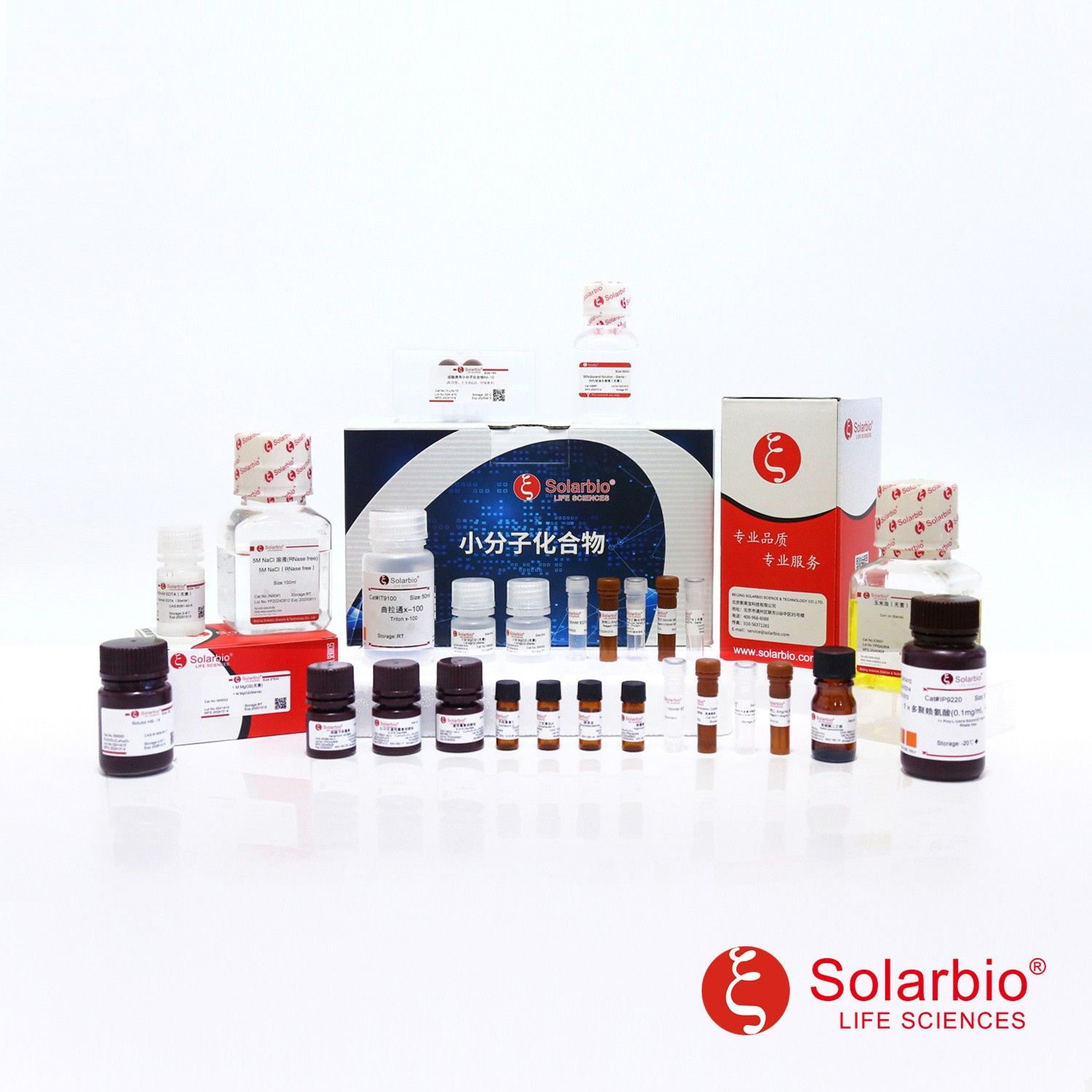
- ¥1490 - 4990
- Solarbio

- 北京
- IT2930
- 2026年05月21日

企业认证
相关产品推荐更多 >
万千商家帮你免费找货
0 人在求购买到急需产品
- 详细信息
- 文献和实验
- 技术资料
- 保存条件:
Powder:-20℃,2 years;Insolvent(母液):-20℃,6 months;-80℃,1 year
- 保质期:
Powder:-20℃,2 years;Insolvent(母液):-20℃,6 months;-80℃,1 year
- 英文名:
TAK-220
- 库存:
现询
- 供应商:
北京索莱宝科技有限公司
- CAS号:
333994-00-6
- 规格:
10mg/5mg/1mg
| 规格: | 10mg | 产品价格: | ¥4990.0 |
|---|---|---|---|
| 规格: | 5mg | 产品价格: | ¥3490.0 |
| 规格: | 1mg | 产品价格: | ¥1490.0 |
| 基本信息 | |
| CAS | No.333994-00-6 |
| 英文名称 | TAK-220 |
| 分子式 | C31H41ClN4O3 |
| 分子量 | 553.14 |
| 溶解性 | Soluble in DMSO |
| 纯度 | ≥98% |
| 外观(性状) | White to off-white Solid |
| 储存条件 | Powder:-20℃,2 years;Insolvent(母液):-20℃,6 months;-80℃,1 year |
| SMILES | O=C(C1CCN(C(C)=O)CC1)N(CCCN2CCC(CC3=CC=C(C(N)=O)C=C3)CC2)C4=CC=C(C)C(Cl)=C4 |
| InChIKey | ASSJTMUEFHUKMJ-UHFFFAOYSA-N |
| InChI | InChI=1S/C31H41ClN4O3/c1-22-4-9-28(21-29(22)32)36(31(39)27-12-18-35(19-13-27)23(2)37)15-3-14-34-16-10-25(11-17-34)20-24-5-7-26(8-6-24)30(33)38/h4-9,21,25,27H,3,10-20H2,1-2H3,(H2,33,38) |
| PubChem CID | 5275766 |
| 靶点 | CCR5 |
| 通路 | Immunology & Inflammation;GPCR & G Protein |
| 背景说明 | TAK-220是一种选择性的 CCR5 拮抗剂。 |
| 生物活性 | TAK-220 is a selective and orally bioavailable CCR5 antagonist, with IC50s of 3.5 nM and 1.4 nM for inhibition on the binding of RANTES and MIP-1α to CCR5, respectively, but shows no effect on the binding to CCR1, CCR2b, CCR3, CCR4, or CCR7; TAK-220 also selectively inhibits HIV-1, with EC50s of 1.2 nM (HIV-1 KK), 0.72 nM (HIV-1 CTV), 1.7 nM (HIV-1 HKW), 1.7 nM (HIV-1 HNK), 0.93 nM (HIV-1 HTN), and 0.55 nM (HIV-1 HHA), and EC90s of 12 nM (HIV-1 KK), 5 nM (HIV-1 CTV), 12 nM (HIV-1 HKW), 28 nM (HIV-1 HNK), 15 nM (HIV-1 HTN), and 4 nM (HIV-1 HHA) in PBMCs.[1]{2} |
| In Vitro | TAK-220 is a selective CCR5 antagonist, with IC50s of 3.5 nM and 1.4 nM for inhibition on the binding of RANTES and MIP-1α to CCR5 in CHO cells, respectively, but shows no effect on the binding to CCR1, CCR2b, CCR3, CCR4, or CCR7.TAK-220 (0-1000 nM) interacts with CCR5 but not with RANTES and inhibits the CCR5-mediated Casup>2+ signaling. TAK-220 inhibits R5 HIV-1 (JR-FL) envelope-mediated membrane fusion, with an IC50 value of 0.42 nM, but does not alter X4 HIV-1 (HXB2) envelope-mediated membrane fusion. TAK-220 also selectively inhibits HIV-1, with EC50s of 1.2 nM (HIV-1 KK), 0.72 nM (HIV-1 CTV), 1.7 nM (HIV-1 HKW), 1.7 nM (HIV-1 HNK), 0.93 nM (HIV-1 HTN), and 0.55 nM (HIV-1 HHA), and EC90s of 12 nM (HIV-1 KK), 5 nM (HIV-1 CTV), 12 nM (HIV-1 HKW), 28 nM (HIV-1 HNK), 15 nM (HIV-1 HTN), and 4 nM (HIV-1 HHA) in PBMCs[1]. TAK-220 shows potent inhibitory activity against the R5 isolates, with IC50s of 3.12 nM against HIV-1 R5-08, 13.47 nM against HIV-1 R5-06, and 2.26 nM against HIV-1 R5-18. TAK-220 (>100 nM) has no toxicity in uninfected PBMCs[2]. |
| 细胞实验 | PHA-stimulated PBMCs are inoculated with 1,000 to 1,400 CCID50s of R5 HIV-1 (JR-FL) or X4 HIV-1 (IIIB) or with 13 to 55 ng of p24 of HIV-1 clinical isolates per 4 × 10⁶ cells and incubated for 4 h. The cells are washed to remove unadsorbed viral particles and seeded into a 96-well plate (2 × 10⁵ cells/well) with culture medium containing various concentrations of TAK-220. The effects of high concentrations of human serum (HS) on the anti-HIV-1 activity of TAK-220 are examined with RPMI 1640 medium supplemented with either 20% FBS alone or 40% human type AB serum plus 10% FBS, 100 U/mL recombinant human interleukin 2, and antibiotics. On day 4 after infection, the cells are subcultured at 1:2 with culture medium containing the same concentrations of the test compounds. On day 7 after infection, the culture supernatants are collected and their p24 antigen levels are determined with a p24 antigen enzyme-linked immunosorbent assay kit[1]. |
| 数据来源文献 | [1]. Takashima K, et al. Highly potent inhibition of human immunodeficiency virus type 1 replication by TAK-220, an orally bioavailable small-molecule CCR5 antagonist. Antimicrob Agents Chemother. 2005 Aug;49(8):3474-82. [2]. Tremblay CL, et al. TAK-220, a novel small-molecule CCR5 antagonist, has favorable anti-human immunodeficiency virus interactions with other antiretrovirals in vitro. Antimicrob Agents Chemother. 2005 Aug;49(8):3483-5. |
| 单位 | 瓶 |
风险提示:丁香通仅作为第三方平台,为商家信息发布提供平台空间。用户咨询产品时请注意保护个人信息及财产安全,合理判断,谨慎选购商品,商家和用户对交易行为负责。对于医疗器械类产品,请先查证核实企业经营资质和医疗器械产品注册证情况。
 文献和实验
文献和实验7 3 8 2 胃粘膜脱垂 15 12 3 10 5 胃癌 5 5 5 合计 250 219 31 220 30 3 讨论 Hp经口→口传染途径亦有报道,家庭成员之间的相互感染,尚无一致性的结论。我们发现胃粘膜Hp感染和舌苔Hp感染几乎同时存在。如本组资料中胃窦粘膜和舌苔Hp感染几乎无显著差异性,且85.5%的舌苔Hp感染患者胃窦粘膜Hp也有阳性。本组结果提示,Hp经口→口传播,家庭内相互感染,是慢性胃病患者的主要病因之一。 从本组观察舌象的演变,慢性胃病患者如有炎症存在,则舌质
以及活化过程中,出现或消失的细胞表面标记。它们大都是穿膜的蛋白或糖蛋白,含胞膜外区、穿膜区和胞浆区。有些白细胞分化抗原是以磷脂酰肌醇(inositol phospholipids,IP)连接方式“锚”在细胞膜上。少数白细胞分化抗原是碳水化合物半抗原。白细胞分化抗原参与机体重要的生理和病理过程。例如:①免疫应答过程中免疫细胞的相互识别,免疫细胞抗原识别、活化、增殖和分化,免疫效应功能的发挥;②造血细胞的分化和造血过程的调控;③炎症发生;④细胞的迁移如肿瘤细胞的转移。 一、人白细胞分化抗原
与细胞间、细胞与基质间或细胞-基质-细胞之间的粘附,参与细胞的信号转导与活化、细胞的伸展和移动、细胞的生长及分化、炎症、血栓形成、肿瘤转移、创伤愈合等一系列重要生理和病理过程。 对于细胞间相互接触、粘附的现象人们早有认识。80年代以后,由于单克隆抗体技术和分子生物学技术的发展和应用,极大地推动了对粘附分子的研究,使人们得以从分子水平上提出粘附分子的概念,并逐渐认识其作用机理。目前已基因克隆成功的粘附分子有几十种,形成一个庞大的粘附分子大家族。由于粘附分子所具有广泛、重要的生物学功能功能
 技术资料
技术资料暂无技术资料 索取技术资料

