


- ¥1800 - 3800
- 华尔纳生物
- WN-73833
- 武汉
- 2025年07月12日

企业认证
相关产品推荐更多 >



万千商家帮你免费找货
0 人在求购买到急需产品
相关阅读
AJE 润色服务限时 8 折起,权威机构信任 15+ 年Cytoscape 教程来了!快速实现顶刊同款通路网络图五大应用案例:Mustang Q 膜层析应用全解析1 个小工具,一次性搞定流程图、质粒图谱和信号通路图- 详细信息
- 文献和实验
- 技术资料
- 品系:
详询
- 细胞类型:
产品说明/详询
- 肿瘤类型:
详询
- 供应商:
武汉华尔纳生物科技有限公司
- 库存:
999
- 英文名:
人小胶质细胞
- 生长状态:
产品说明/详询
- 年限:
5
- 运输方式:
快递
- 器官来源:
产品说明/详询
- 是否是肿瘤细胞:
详询
- 细胞形态:
产品说明/详询
- 免疫类型:
详询
- 物种来源:
产品说明/详询
- 相关疾病:
详询
- 组织来源:
产品说明/详询
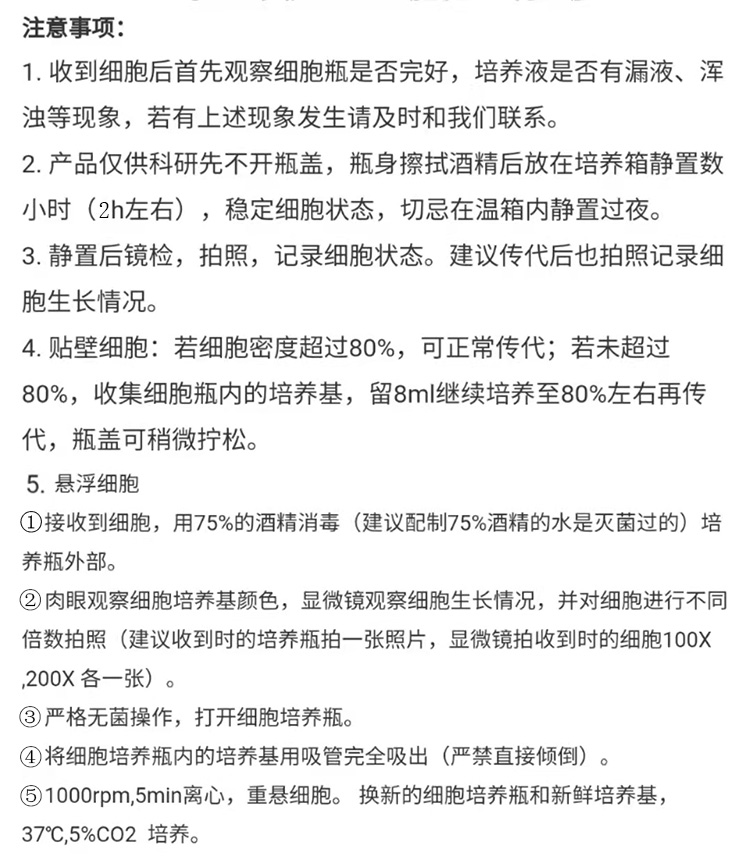
细胞代次低,活性高,品质保证,提供全程7*24小时专业技术指导售后服务 (养不活无理由全额退款)
| 产品简称 | |
| 商品货号 | WN-73833 |
| 中文名称 | 人小胶质细胞 |
| 种属 | 人 |
| 组织来源 | 正常脑组织 |
| 传代比例 | 1:2传代 |
| 简介 | 小胶质细胞分布于整个中枢系统,是中枢神经系统最小的一种胶质细胞,约占整个胶质细胞的5-10%。作为常驻中枢神经系统的免疫效应细胞,小胶质细胞及其介导的神经炎症在中枢神经系统的损伤及疾病的转归过程中起着非常重要的作用。 |
| 形态 | 圆形细胞样,不规则细胞样 |
| 生长特征 | 贴壁生长 |
| 细胞检测 | CD68免疫荧光染色为阳性免疫荧光鉴定,细胞纯度可达90%以上,不含有HIV-1、HBV、HCV、支原体、细菌、酵母和真菌等。 |
| 倍增时间 | 该细胞终末分化细胞增殖能力很弱。 |
| 换液频率 | 2-3天换液一次 |
| 培养条件 | 气相:空气,95%;二氧化碳,5%。 温度:37摄氏度,培养箱湿度为70%-80%。 基础培养基500ml;生长添加剂5ml;胎牛血清50ml;双抗5ml |
| 产品使用 | 仅限于科学研究,不可作为动物或人类疾病的治疗产品使用。 |




风险提示:丁香通仅作为第三方平台,为商家信息发布提供平台空间。用户咨询产品时请注意保护个人信息及财产安全,合理判断,谨慎选购商品,商家和用户对交易行为负责。对于医疗器械类产品,请先查证核实企业经营资质和医疗器械产品注册证情况。
 文献和实验
文献和实验用碳酸银浸镀法显示的小胶质细胞是中枢神经系统中最小的一种胶质细胞。细胞体呈细长或椭圆,从胞体发出细长而有分支的突起,表面有许多小棘突。常规染色见核细长或三角形,染色较深。电镜下小胶质细胞染色深,核扁平或锯齿状,胞质内溶酶体较多。小胶质细胞数量少,约占全部胶质细胞的 5 %。此细胞是定居在脑内的吞噬细胞,在炎症刺激下,其抗原性增强,形态伸展,功能活跃。小胶质细胞在脑内各部分均有分布,在灰质中的数量比在白质中的多 5 倍。海马、嗅叶和基底神经节的小胶质细胞比丘脑和下丘脑的多,而脑干与小脑中
Nat Metab:浙江大学高志华 / 段树民课题组揭示Ⅱ型己糖激酶调控小胶质细胞功能的新机制
2022 年 12 月 20 日,浙江大学医学院脑科学与脑医学学院高志华教授与段树民院士团队在 Nature Metabolism 在线发表题为 Dual roles of hexokinase 2 in shaping microglial function by gating glycolytic flux and mitochondrial activity 的工作。该研究揭示小胶质细胞特异高表达的Ⅱ型己糖激酶(Hexokinase 2,HK2)在调控小胶质细胞生理和病理功能中的双重
gate,选择活细胞,然后依据脉冲宽度与面积比选择线性分布细胞,依据前向散射与侧散射比来消除碎屑。然后依据不同细胞类型的相应标记来获得等效和准确的细胞计数。 小胶质细胞分离流程示意图,如图1
 技术资料
技术资料需要更多技术资料 索取更多技术资料

