- 询价
- KA&M BIO
- 国产
- BFS2603
- 2025年07月05日

企业认证
相关产品推荐更多 >

万千商家帮你免费找货
0 人在求购买到急需产品
- 详细信息
- 文献和实验
- 技术资料
- 保存条件:
低温
- 保质期:
详见说明
- 库存:
99
- 供应商:
上海圻明生物
- 规格:
50次
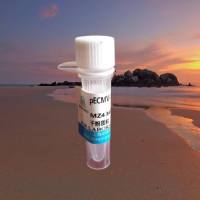
Paenibacillus mucilaginosus胶冻样类芽孢杆菌染料法qPCR试剂盒上海圻明生物优势供应。更多产品资料欢迎免费咨询。
One of the many important uses of PCR technology is that it can be used to label DNA probes with high specific activity. PCR technology has high specificity, and can synthesize probe DNA fragments in quantities within 1~2h if [α-32P]dNTP or other markers are added to the substrate
dNTPs, the probe DNA can be well labeled during DNA synthesis, and the incorporation rate of the marker can be as high as 70%~80%. Therefore, PCR labeling technology is particularly suitable for large-scale detection and non-radiolabeling. The disadvantage of this method is that a specific pair of PCR primers is synthesized.
Labeling can also be achieved by using small fragments prepared from probe DNA as primers.
Solution preparation
1. Prepare a stock solution
Unless otherwise stated, all unused stock solutions should be divided into disposable aliquots and stored at -20 °C after preparation. Avoid repeated freeze-thaw cycles.
1.1* Acid Stock Solution (125X):
Add 20 μL DMSO to *ate (component B) to make a 125X* acid stock solution.
2. Prepare standard solutions
*Salt standard solution
Add 50 μL of 1 mM KH2PO4 (Component C) to 950 μL of deionized water or enzyme reaction buffer to give a 50 μM * saline standard solution (PS7). A 50 μM * saline standard solution (PS7) was taken and serially diluted 1:2 to obtain a serially diluted phosphate standard with deionized water or enzyme reaction buffer.
3. Prepare a working solution
Add 20 μL of 125X* stock solution to 2.5 mL of sterile H2O and mix well to make a working solution of *salt. Avoid potential Pi contamination. Note: Avoid direct exposure of *salts (component B) to light. Due to the high sensitivity of this assay to Pi, it is extremely important to use Pi-free labware and reagents.
风险提示:丁香通仅作为第三方平台,为商家信息发布提供平台空间。用户咨询产品时请注意保护个人信息及财产安全,合理判断,谨慎选购商品,商家和用户对交易行为负责。对于医疗器械类产品,请先查证核实企业经营资质和医疗器械产品注册证情况。
 文献和实验
文献和实验荧光定量 PCR 的常见异常结果除了扩增曲线异常、融解曲线异常两类常见情况外,qPCR 实验中通常还会遇到以下三大类情况: 1. 复孔间重复性差怎么办? 复孔间重复性差一般会有以下两种情况: (1)CT 值很大,如 CT≥ 30,重复性差属于正常现象。该现象符合泊松分布,即在有效模板量很少的情况下,模板与引物的碰撞存在随机性,直接导致复孔间的 CT 值差异较大。 解决方法:如果融解曲线没有杂峰,无模板阴性对照同目的基因的 △CT 值为 3 or 5 以上,那 CT 值为准确的,可多设置
Real-time qPCR 手册——手把手教你从菜鸟到高手
方程: 从线性方程上看,斜率(slope)为 -1/lg(1+E),所以 E = 10-1/slope-1。如果从标准曲线上得到斜率(-3.3),就可以算出扩增效率(0.99)。一般来讲PCR扩增效率在 90%-110% 都是可以用于数据分析的。效率低于 100%,是由于 PCR 反应中存在抑制因素;而高于 100% 可能一些污染、非特异性扩增或者是引物二聚体造成。 3. Real-time qPCR 的种类 根据 real-time qPCR 的化学发光原理可以分为2大类:一类为探针类,包括
PCR扩增效率在90%-110%都是可以用于数据分析的。效率低于100%,是由于PCR反应中存在抑制因素;而高于100%可能一些污染、非特异性扩增或者是引物二聚体造成。3. Real-time qPCR的种类根据real-time qPCR的化学发光原理可以分为2大类:一类为探针类,包括TaqMan@探针和分子信标,利用与靶序列特异杂交的探针来指示扩增产物的增加;一类为非探针类,其中包括如SYBR@Green I或者特殊设计的引物(如LUX@Primers) 通过荧光染料来指示产物的增加
 技术资料
技术资料暂无技术资料 索取技术资料