- ¥600 - 3200
- 上海莼试
- CS-01Y64848
- 国产
- 2025年11月17日
8 年钻石会员
企业认证
万千商家帮你免费找货
0 人在求购买到急需产品
- 详细信息
- 技术资料
- 库存:
34
- 英文名:
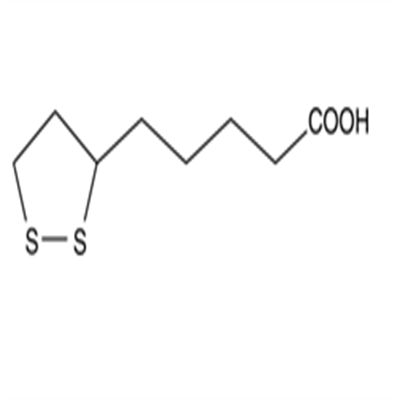
DL-α-Lipoic Acid
- CAS号:
1077-28-7
- 供应商:
上海莼试
- 保存条件:
Store at -20°C
- 规格:
1g 5g 10g 25g
商品属性:
产品描述:
分子式:
分子量:206.3
溶解度:DMF: 30 mg/ml,DMSO: 30 mg/ml,Ethanol: 30 mg/ml,Ethanol:PBS (pH 7.2)(1:8): .25 mg/ml
储存条件:Store at 2-8°C
General tips:For obtaining a higher solubility , please warm the tube at 37 ℃ and shake it in the ultrasonic bath for a while.
Shipping Condition:Evaluation sample solution : ship with blue ice All other available size: ship with RT , or blue ice upon request
α-Lipoic Acid is an antioxidant, which is an essential cofactor of mitochondrial enzyme complexes. α-Lipoic Acid inhibits NF-κB-dependent HIV-1 LTR activation.The long terminal repeat (LTR) of HIV-1 is the target of cellular transcription factors such as NF-κB, and serves as the promoter-enhancer for the viral genome when integrated in host DNA[1]. α-Lipoic Acid (Alpha-Lipoic acid, ALA), a naturally occurring dithiol compound, plays an essential role in mitochondrial bioenergetics. α-Lipoic Acid reduces lipid accumulation in the liver by regulating the transcriptional factors SREBP-1, FoxO1, and Nrf2, and their downstream lipogenic targets via the activation of the SIRT1/LKB1/AMPK pathway. Treatment of cells with α-Lipoic Acid (250, 500 and 1000 μM) significantly increases the NAD+/NADH ratio in HepG2 cells (P<0.05 or P<0.01). Treatment with α-Lipoic Acid (50, 125, 250 and 500 μM) increases SIRT1 activity in HepG2 cells. α-Lipoic Acid (50, 125, 250, 500 and 1000 μM) increases phosphorylation of AMPK and acetyl-CoA carboxylase (ACC) in HepG2 cells in a dose-dependent fashion[1].C57BL/6J mice, divided into four groups, are fed an high-fat diet (HFD) for 24 weeks to induce nonalcoholic fatty liver disease (NAFLD) followed by daily administration of α-Lipoic Acid. Then, the effects of α-Lipoic Acid on hepatic lipid accumulation in long-term HFD-fed mice are assessed. Administration of α-Lipoic Acid (100 mg/kg or 200 mg/kg) markedly reduces visceral fat mass in mice. In addition, α-Lipoic Acid (100 mg/kg or 200 mg/kg) treatment inhibits the appetite and causes a dramatic weight loss (all P<0.05)[1].References:[1]. Xiao L, et al. Activity of the dietary antioxidant ergothioneine in a virus gene-based assay for inhibitors of HIV transcription. Biofactors. 2006;27(1-4):157-65.[2]. Lei D, et al. Synergistic neuroprotective effect of rasagiline and idebenone against retinal ischemia-reperfusion injury via the Lin28-let-7-Dicer pathway. Oncotarget. 2018 Jan 30;9(15):12137-12153.[3]. Yang Y, et al. Alpha-lipoic acid improves high-fat diet-induced hepatic steatosis by modulating the transcription factors SREBP-1, FoxO1 and Nrf2 via the SIRT1/LKB1/AMPK pathway. J Nutr Biochem. 2014 Nov;25(11):1207-1217.
注意事项:
抗逆滴加序列
每次向板内滴加抗原时,移液器滴头要与平面45度悬空,不要触碰到孔内的液体,由后向前依次滴加(即浓度由低往高滴加)。
抗感染反应期
抗原抗体在室温20~25℃下,必须反应30min以上,若环境温度低于室温,可将微量反应板置于恒温培养箱中,使二者充分反应。
旅游温度
磷酸盐缓冲液的pH值要在高压灭菌后进行滴定,往往在高压后pH值会有所改变,所以高压后再调一次pH值更为准确。磷酸盐缓冲液一经使用保存期不要超过3周。当pH<5.8时,红细胞会产生自凝现象;当pH>7.8时,图形洗脱加快,易造成肉眼观察产生误差;p H=7.2时,红细胞沉降最充分,图形最清晰。
当滴注 1%红细胞悬液时,应经常摇晃红细胞悬液,使红细胞均匀地分布在磷酸缓冲液中,以防止红细胞下降。
反应时间及温度
加入鸡红血球之后,反应板在室温(20~25℃)静置30~40min,对照孔血球下沉于孔底,即可判定结果。若室温达不到实验要求,需相应调整反应时间。当环境温度低于4℃时,红细胞发生自凝;高于37℃时,会发生反应物分离和红细胞溶血。
使用方法:
1.本蛋白酶抑制剂混合物为100×的储存液,使用时按照1:100的比例加入到裂解液中(例如,1ml裂解液中加入10μl蛋白酶抑制剂混合物),混匀后即可使用。根据需要,0.5M的EDTA也按照1:100的比例加入到裂解液中(如用于检测金属蛋白酶活性,则不宜添加EDTA)。含有蛋白酶抑制剂混合物的裂解液宜现用现配,不宜配制后冻存待后续使用。
2. 待所需的抑制剂添加完毕混匀后,就可以开始进行哺乳动物组织的裂解和蛋白提取。
公司正在出售的产品:
| 货号 | CS-01Y64848 | 规格 | 1g 5g 10g 25g |
| CAS号 | 1077-28-7 | 分子量 | 206.3 |
| 含量 | >99.00% | 别名 | N/A |
| 分子式 | 化学名 | N/A | |
| 产地 | 国产 | 用途 | 仅供科研研究实验 |
分子式:
分子量:206.3
溶解度:DMF: 30 mg/ml,DMSO: 30 mg/ml,Ethanol: 30 mg/ml,Ethanol:PBS (pH 7.2)(1:8): .25 mg/ml
储存条件:Store at 2-8°C
General tips:For obtaining a higher solubility , please warm the tube at 37 ℃ and shake it in the ultrasonic bath for a while.
Shipping Condition:Evaluation sample solution : ship with blue ice All other available size: ship with RT , or blue ice upon request
α-Lipoic Acid is an antioxidant, which is an essential cofactor of mitochondrial enzyme complexes. α-Lipoic Acid inhibits NF-κB-dependent HIV-1 LTR activation.The long terminal repeat (LTR) of HIV-1 is the target of cellular transcription factors such as NF-κB, and serves as the promoter-enhancer for the viral genome when integrated in host DNA[1]. α-Lipoic Acid (Alpha-Lipoic acid, ALA), a naturally occurring dithiol compound, plays an essential role in mitochondrial bioenergetics. α-Lipoic Acid reduces lipid accumulation in the liver by regulating the transcriptional factors SREBP-1, FoxO1, and Nrf2, and their downstream lipogenic targets via the activation of the SIRT1/LKB1/AMPK pathway. Treatment of cells with α-Lipoic Acid (250, 500 and 1000 μM) significantly increases the NAD+/NADH ratio in HepG2 cells (P<0.05 or P<0.01). Treatment with α-Lipoic Acid (50, 125, 250 and 500 μM) increases SIRT1 activity in HepG2 cells. α-Lipoic Acid (50, 125, 250, 500 and 1000 μM) increases phosphorylation of AMPK and acetyl-CoA carboxylase (ACC) in HepG2 cells in a dose-dependent fashion[1].C57BL/6J mice, divided into four groups, are fed an high-fat diet (HFD) for 24 weeks to induce nonalcoholic fatty liver disease (NAFLD) followed by daily administration of α-Lipoic Acid. Then, the effects of α-Lipoic Acid on hepatic lipid accumulation in long-term HFD-fed mice are assessed. Administration of α-Lipoic Acid (100 mg/kg or 200 mg/kg) markedly reduces visceral fat mass in mice. In addition, α-Lipoic Acid (100 mg/kg or 200 mg/kg) treatment inhibits the appetite and causes a dramatic weight loss (all P<0.05)[1].References:[1]. Xiao L, et al. Activity of the dietary antioxidant ergothioneine in a virus gene-based assay for inhibitors of HIV transcription. Biofactors. 2006;27(1-4):157-65.[2]. Lei D, et al. Synergistic neuroprotective effect of rasagiline and idebenone against retinal ischemia-reperfusion injury via the Lin28-let-7-Dicer pathway. Oncotarget. 2018 Jan 30;9(15):12137-12153.[3]. Yang Y, et al. Alpha-lipoic acid improves high-fat diet-induced hepatic steatosis by modulating the transcription factors SREBP-1, FoxO1 and Nrf2 via the SIRT1/LKB1/AMPK pathway. J Nutr Biochem. 2014 Nov;25(11):1207-1217.
注意事项:
抗逆滴加序列
每次向板内滴加抗原时,移液器滴头要与平面45度悬空,不要触碰到孔内的液体,由后向前依次滴加(即浓度由低往高滴加)。
抗感染反应期
抗原抗体在室温20~25℃下,必须反应30min以上,若环境温度低于室温,可将微量反应板置于恒温培养箱中,使二者充分反应。
旅游温度
磷酸盐缓冲液的pH值要在高压灭菌后进行滴定,往往在高压后pH值会有所改变,所以高压后再调一次pH值更为准确。磷酸盐缓冲液一经使用保存期不要超过3周。当pH<5.8时,红细胞会产生自凝现象;当pH>7.8时,图形洗脱加快,易造成肉眼观察产生误差;p H=7.2时,红细胞沉降最充分,图形最清晰。
当滴注 1%红细胞悬液时,应经常摇晃红细胞悬液,使红细胞均匀地分布在磷酸缓冲液中,以防止红细胞下降。
反应时间及温度
加入鸡红血球之后,反应板在室温(20~25℃)静置30~40min,对照孔血球下沉于孔底,即可判定结果。若室温达不到实验要求,需相应调整反应时间。当环境温度低于4℃时,红细胞发生自凝;高于37℃时,会发生反应物分离和红细胞溶血。
使用方法:
1.本蛋白酶抑制剂混合物为100×的储存液,使用时按照1:100的比例加入到裂解液中(例如,1ml裂解液中加入10μl蛋白酶抑制剂混合物),混匀后即可使用。根据需要,0.5M的EDTA也按照1:100的比例加入到裂解液中(如用于检测金属蛋白酶活性,则不宜添加EDTA)。含有蛋白酶抑制剂混合物的裂解液宜现用现配,不宜配制后冻存待后续使用。
2. 待所需的抑制剂添加完毕混匀后,就可以开始进行哺乳动物组织的裂解和蛋白提取。
公司正在出售的产品:
| L-Ser(Bzl)-ol | Endothall |
| p-APMSF (hydrochloride) | 人晚期氧化蛋白产物(AOPP)ELISA试剂盒 |
| 9-(2,2-Dicyanovinyl)julolidine | 人胰岛淀粉样多肽(IAPP)试剂盒 ELISA |
| GSK2606414 | 人糖化白蛋白(GA)ELISA Kit |
| Cdk1/2 Inhibitor III | 人糖化蛋白(GSP) ELISA检测试剂盒 |
| Ripasudil free base | 人甲状腺结合球蛋白(TBG)ELISA试剂盒 |
| Phen-DC3 Trifluoromethanesulfonate (Phen-DC3 Triflate) | 人晚期糖基化终末产物(AGEs)试剂盒 ELISA |
| Deacetyltaxol | 人C多肽(CP) ELISA检测试剂盒 |
| KRIBB3 | 人转甲状腺素蛋白(TTR)ELISA Kit |
| Thymosin β4 (human, mouse, rat, porcine, bovine) (acetate) | 人胰岛素受底物2(IRS-2)ELISA检测试剂盒 |
| Trinactin | 人Salusin-α 试剂盒 ELISA |
| PF-06380101 | 人白血病抑制因子(LIF)ELISA试剂盒 |
| CW069 | DL-α-Lipoic Acid人血小板生成素(TPO)ELISA Kit |
| Licoricone | 人白细胞调节素(LR)ELISA检测试剂盒 |
| 人血吸虫ELISA试剂盒 | 人髓系细胞触发受-1(TREM-1)试剂盒 ELISA |
风险提示:丁香通仅作为第三方平台,为商家信息发布提供平台空间。用户咨询产品时请注意保护个人信息及财产安全,合理判断,谨慎选购商品,商家和用户对交易行为负责。对于医疗器械类产品,请先查证核实企业经营资质和医疗器械产品注册证情况。
 技术资料
技术资料暂无技术资料 索取技术资料
DL-α-Lipoic Acid
¥600 - 3200