

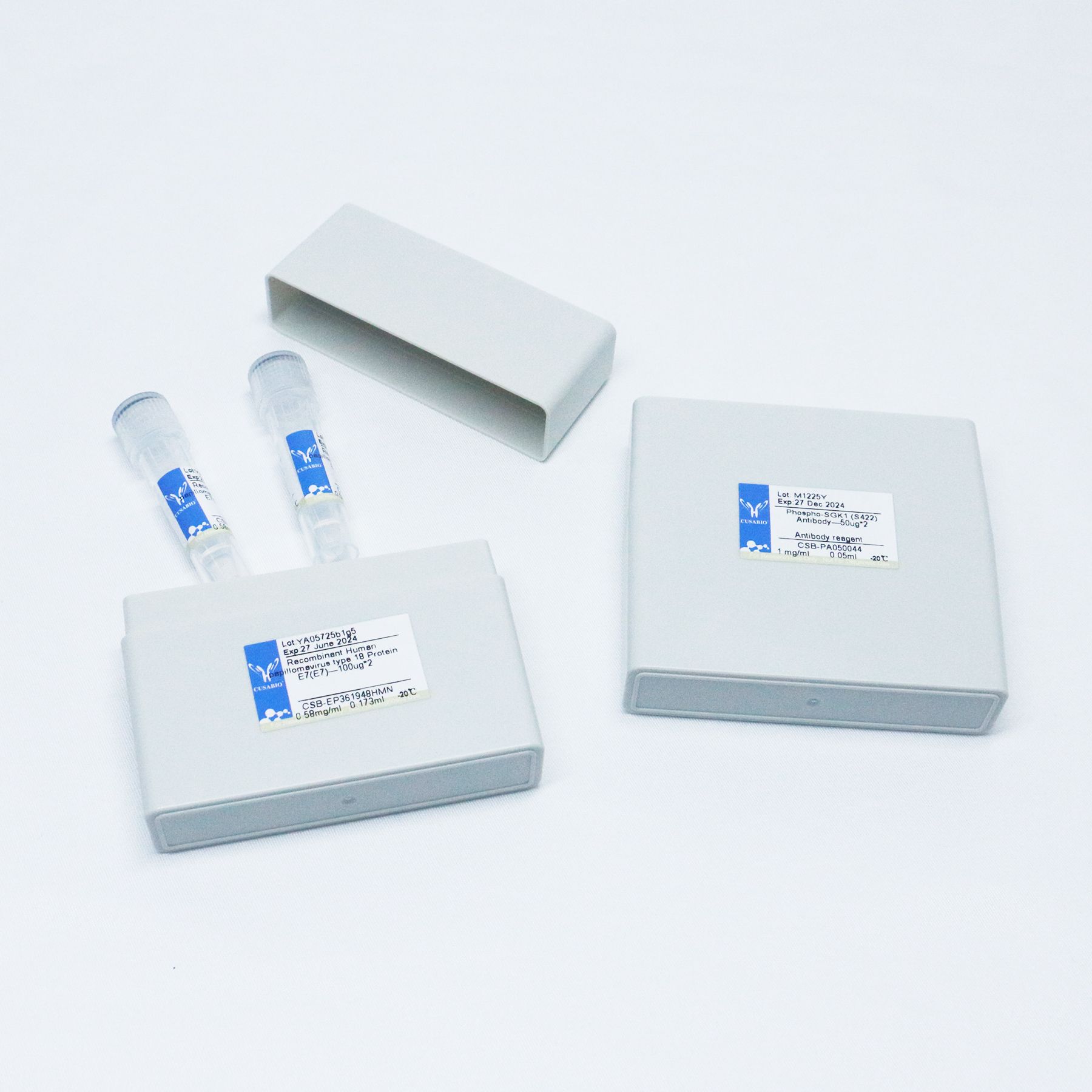
人TGFB1重组蛋白(LAP)(TGF-beta-1)Hum
an Transforming growth factor beta-1 proprotein(TGFB1)(C33S)蛋白- ¥1536
- CUSABIO

- CN
- CSB-MP023446HU(A4)(M)
- 2026年01月20日

企业认证
相关产品推荐更多 >
Recombinant-Kluyveromyces-lactis-Protein-SYM1SYM1Protein SYM1
¥10514
Recombinant-Mouse-Olfactory-receptor-480Olfr480Olfactory receptor 480 Alternative name(s): Odorant receptor S25 Olfactory receptor 204-32
¥11550
Recombinant-Anoxybacillus-flavithermus-ATP-synthase-subunit-catpEATP synthase subunit c Alternative name(s): ATP synthase F(0) sector subunit c F-type ATPase subunit c; F-ATPase subunit c Lipid-binding protein
¥9408
Recombinant-Staphylococcus-haemolyticus-Putative-antiporter-subunit-mnhE2mnhE2Putative antiporter subunit mnhE2 Alternative name(s): Mrp complex subunit E2 Putative NADH-ubiquinone oxidoreductase subunit mnhE2
¥10206
//重组蛋白Lqh-alpha-IT Short name: Alpha-ITLeiurus quinquestriatus hebraeus Alpha-insect toxin LqhaIT蛋白
¥2328
万千商家帮你免费找货
0 人在求购买到急需产品
- 详细信息
- 文献和实验
- 技术资料
- 保存条件:
We recommend to add 5-50% of glycerol (final concentration) and aliquot for long-term storage at -20℃/-80℃.
- 保质期:
Generally, the shelf life of liquid form is 6 months at -20℃/-80℃. The shelf life of lyophilized form is 12 months at -20℃/-80℃.
- 英文名:
Recombinant Human Transforming growth factor beta-1 proprotein (TGFB1) (C33S)
- 库存:
200
- 供应商:
武汉华美生物工程有限公司
- 规格:
20μg
英文名称:
Recombinant Human Transforming growth factor beta-1 proprotein (TGFB1) (C33S)品名简称:
Recombinant Human TGFB1 protein货号:
CSB-MP023446HU(A4)(M)规格:
20μg价格:
1536LC-MS/Western Blot:
/SDS-PAGE:
(Tris-Glycine gel) Discontinuous SDS-PAGE (reduced) with 5% enrichment gel and 15% separation gel.纯度:
Greater than 90% as determined by SDS-PAGE.内毒素:
Not test生物活性:
/基因名:
TGFB1Uniprot No.:
P01137别名:
(LAP)(TGF-beta-1)种属:
Homo sapiens (Human)蛋白长度:
Full Length of Mature Protein来源:
Mammalian cell分子量:
46.1 kDa表达区域:
30-390aa氨基酸序列:
LSTSKTIDMELVKRKRIEAIRGQILSKLRLASPPSQGEVPPGPLPEAVLALYNSTRDRVAGESAEPEPEPEADYYAKEVTRVLMVETHNEIYDKFKQSTHSIYMFFNTSELREAVPEPVLLSRAELRLLRLKLKVEQHVELYQKYSNNSWRYLSNRLLAPSDSPEWLSFDVTGVVRQWLSRGGEIEGFRLSAHCSCDSRDNTLQVDINGFTTGRRGDLATIHGMNRPFLLLMATPLERAQHLQSSRHRRALDTNYCFSSTEKNCCVRQLYIDFRKDLGWKWIHEPKGYHANFCLGPCPYIWSLDTQYSKVLALYNQHNPGASAAPCCVPQALEPLPIVYYVGRKPKVEQLSNMIVRSCKCS蛋白标签:
N-terminal 10xHis-Myc-tagged产品提供形式:
Liquid or Lyophilized powder缓冲液:
If the delivery form is liquid, the default storage buffer is Tris/PBS-based buffer, 5%-50% glycerol. If the delivery form is lyophilized powder, the buffer before lyophilization is Tris/PBS-based buffer, 6% Trehalose, pH 8.0.储存条件:
We recommend that this vial be briefly centrifuged prior to opening to bring the contents to the bottom. Please reconstitute protein in deionized sterile water to a concentration of 0.1-1.0 mg/mL.We recommend to add 5-50% of glycerol (final concentration) and aliquot for long-term storage at -20℃/-80℃. Our default final concentration of glycerol is 50%. Customers could use it as reference.保质期:
The shelf life is related to many factors, storage state, buffer ingredients, storage temperature and the stability of the protein itself. Generally, the shelf life of liquid form is 6 months at -20℃/-80℃. The shelf life of lyophilized form is 12 months at -20℃/-80℃.货期:
18-28 business days注意事项:
Repeated freezing and thawing is not recommended. Store working aliquots at 4℃ for up to one week.功能1:
Transforming growth factor beta-1 proprotein: Precursor of the Latency-associated peptide (LAP) and Transforming growth factor beta-1 (TGF-beta-1) chains, which constitute the regulatory and active subunit of TGF-beta-1, respectively. ; [Latency-associated peptide]: Required to maintain the Transforming growth factor beta-1 (TGF-beta-1) chain in a latent state during storage in extracellular matrix. Associates non-covalently with TGF-beta-1 and regulates its activation via interaction with 'milieu molecules', such as LTBP1, LRRC32/GARP and LRRC33/NRROS, that control activation of TGF-beta-1. Interaction with LRRC33/NRROS regulates activation of TGF-beta-1 in macrophages and microglia (Probable). Interaction with LRRC32/GARP controls activation of TGF-beta-1 on the surface of activated regulatory T-cells (Tregs). Interaction with integrins (ITGAV:ITGB6 or ITGAV:ITGB8) results in distortion of the Latency-associated peptide chain and subsequent release of the active TGF-beta-1. ; [Transforming growth factor beta-1]: Multifunctional protein that regulates the growth and differentiation of various cell types and is involved in various processes, such as normal development, immune function, microglia function and responses to neurodegeneration. Activation into mature form follows different steps: following cleavage of the proprotein in the Golgi apparatus, Latency-associated peptide (LAP) and Transforming growth factor beta-1 (TGF-beta-1) chains remain non-covalently linked rendering TGF-beta-1 inactive during storage in extracellular matrix. At the same time, LAP chain interacts with 'milieu molecules', such as LTBP1, LRRC32/GARP and LRRC33/NRROS that control activation of TGF-beta-1 and maintain it in a latent state during storage in extracellular milieus. TGF-beta-1 is released from LAP by integrins (ITGAV:ITGB6 or ITGAV:ITGB8): integrin-binding to LAP stabilizes an alternative conformation of the LAP bowtie tail and results in distortion of the LAP chain and subsequent release of the active TGF-beta-1. Once activated following release of LAP, TGF-beta-1 acts by binding to TGF-beta receptors (TGFBR1 and TGFBR2), which transduce signal. While expressed by many cells types, TGF-beta-1 only has a very localized range of action within cell environment thanks to fine regulation of its activation by Latency-associated peptide chain (LAP) and 'milieu molecules'. Plays an important role in bone remodeling: acts as a potent stimulator of osteoblastic bone formation, causing chemotaxis, proliferation and differentiation in committed osteoblasts. Can promote either T-helper 17 cells (Th17) or regulatory T-cells (Treg) lineage differentiation in a concentration-dependent manner. At high concentrations, leads to FOXP3-mediated suppression of RORC and down-regulation of IL-17 expression, favoring Treg cell development. At low concentrations in concert with IL-6 and IL-21, leads to expression of the IL-17 and IL-23 receptors, favoring differentiation to Th17 cells. Stimulates sustained production of collagen through the activation of CREB3L1 by regulated intramembrane proteolysis (RIP). Mediates SMAD2/3 activation by inducing its phosphorylation and subsequent translocation to the nucleus. Can induce epithelial-to-mesenchymal transition (EMT) and cell migration in various cell types.功能2:
/文献:
Intron-exon structure of the human transforming growth factor-beta precursor gene.Derynck R., Rhee L., Chen E.Y., van Tilburg A.Nucleic Acids Res. 15:3188-3189(1987)研究领域:
Signal Transduction请点击“在线询价”找客服索取产品说明书及引用文献目录,产品实时更新参数、价格信息、更多文献信息可以查看cusabio官网
风险提示:丁香通仅作为第三方平台,为商家信息发布提供平台空间。用户咨询产品时请注意保护个人信息及财产安全,合理判断,谨慎选购商品,商家和用户对交易行为负责。对于医疗器械类产品,请先查证核实企业经营资质和医疗器械产品注册证情况。
 文献和实验
文献和实验Transforming Growth Factor Beta: A Plasma Tumor Marker
are prostate-specific antigen (PSA), carcinoembryonic antigen (CEA), β-human chorionic gonadotropin (β-HCG), and CA-125. Tumor markers may be specific for certain tumors, such as PSA for prostate cancer, or more generally expressed, such as CEA.
The transforming growth factor (TGF)-β signaling pathway plays a critical role in breast cancer development and progression. Limited data from human studies, however, are currently available to link biomarkers in this pathway directly to the risk
Several critical polypeptide growth factors have been identified for the lung, including transforming growth factor-beta (TGF-β). The three mammalian TGF-β isoforms, TGF-β1, TGF-β2, and TGF-β3, are homologous growth mediators
 技术资料
技术资料暂无技术资料 索取技术资料

