


- ¥1500
- 中乔新舟

- 中国
- ZQ1021
- 2026年02月10日

企业认证
相关产品推荐更多 >



万千商家帮你免费找货
0 人在求购买到急需产品
- 详细信息
- 文献和实验
- 技术资料
- 英文名:
RAMOS
- 库存:
100
- 供应商:
中乔新舟
- 品系:
细胞系
- 运输方式:
常温
- 年限:
液氮长期
- 生长状态:
悬浮
- 规格:
T25
|
产品名称 |
RAMOS 人B淋巴细胞瘤细胞 |
|
货号 |
ZQ1021 |
|
产品介绍 |
Ramos (RA 1) 是一种 B 淋巴细胞系,来源于一名患有伯基特 Burkitt 淋巴瘤的 3 岁男孩的腹水中建立的,是免疫学研究的重要资源。该细胞系以分泌 IgM 为特征,对于 B 细胞表面抗原分析、细胞毒性药物检测、突变分析和凋亡机制探索具有重要价值。
特别注意:该细胞为悬浮细胞,请注意离心收集细胞悬液。细胞形态有部分悬浮聚小团细胞是正常现象 |
|
种属 |
白人 |
|
性别/年龄 |
男/3岁 |
|
组织 |
淋巴 |
|
疾病 |
伯基茨淋巴瘤 |
|
细胞类型 |
肿瘤细胞 |
|
形态学 |
圆形 |
|
生长方式 |
悬浮 |
|
倍增时间 |
20.4 +- 1.5 hours (PubMed=9225077); 23 hours (PubMed=8402660); 14 hours (PubMed=20922763); ~48 hours (DSMZ=ACC-603) |
|
培养基和添加剂 |
RPMI-1640(品牌:中乔新舟 货号:ZQ-200)+10%胎牛血清(中乔新舟 货号:ZQ500-A)+1%P/S(中乔新舟 货号:CSP006) |
|
推荐完全培养基货号 |
ZM1021 |
|
生物安全等级 |
BSL-1 |
|
培养条件 |
95%空气,5%二氧化碳;37℃ |
|
STR位点信息 |
Amelogenin: X CSF1PO :10,11 D1S1656 :12,15.3 D2S441: 11,14 D2S1338: 20,23 D3S1358: 14,15 D5S818: 7,12 D6S1043 :13,15 D7S820 :11 D8S1179: 13 (CLS=302007) :13,16 (ATCC=CRL-1596; CCRID; DepMap=ACH-001636; DSMZ=ACC-603; Technion Genomics Center BCF; PubMed=20922763; PubMed=25877200) D10S1248: 14,15 D12S391: 19,22 D13S317: 12,13,14 (CLS=302007) :13,14 (ATCC=CRL-1596; CCRID; COG; DepMap=ACH-001636; DSMZ=ACC-603; ECACC=85030802; Technion Genomics Center BCF; JCRB=JCRB9119; KCLB=21596; PubMed=20922763; PubMed=25877200) D16S539 :10,13 D18S51: 14,15 (CLS=302007; DSMZ=ACC-603) :15 (ATCC=CRL-1596; CCRID; DepMap=ACH-001636; Technion Genomics Center BCF; PubMed=20922763; PubMed=25877200) D19S433: 14,15.2 D21S11: 30 D22S1045: 15 FGA: 20,24 Penta D :10,13 Penta E: 6,8,21 (CLS=302007) :8,21 (ATCC=CRL-1596; CCRID; DepMap=ACH-001636; DSMZ=ACC- 603; Technion Genomics Center BCF; PubMed=25877200) TH01: 7,9.3 TPOX :8,9 vWA :15,16 |
|
抗原表达/受体表达 |
*** |
|
基因表达 |
*** |
|
保藏机构 |
ATCC; CRL-1596 |
|
供应限制 |
仅供科研使用 |
上海中乔新舟生物科技有限公司成立于2011年,历经十多年发展,主要专注于细胞生物学产品的研究和开发,专注于为药企、各类科研机构及CRO企业提供符合标准规范的细胞培养服务、细胞培养基、细胞检测试剂盒、细胞培养试剂,胎牛血清和细胞生物学技术服务等。
公司一直致力于为高等院校、研究机构、医院、CRO及CDMO企业提供细胞培养完整解决方案,这些产品旨在满足细胞培养的多样需求,确保实验和研究的有效进行。引用中乔新舟(ZQXZBIO)产品和服务的文献超数千篇。
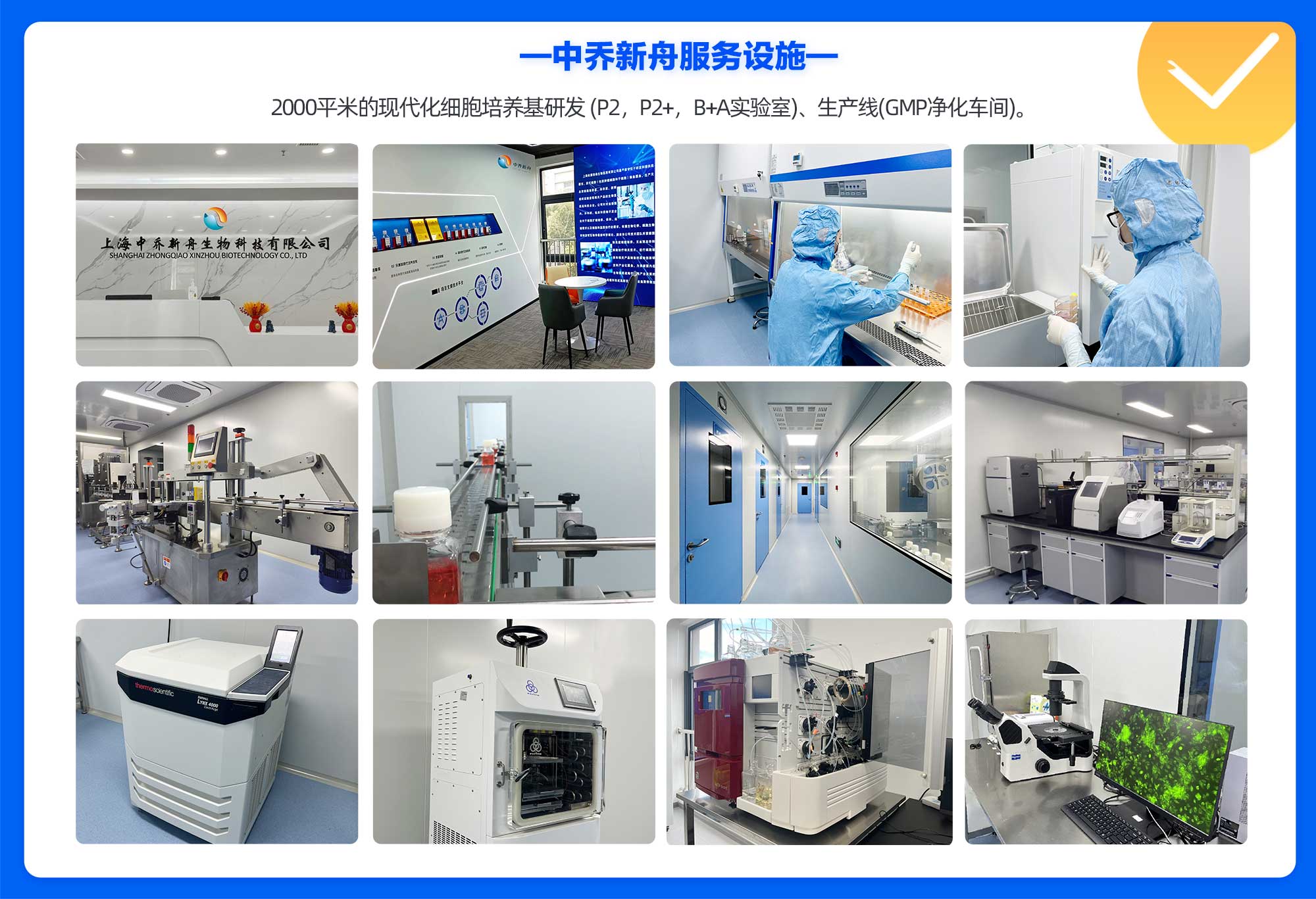
产品服务
细胞资源:原代细胞、细胞株、干细胞、示踪细胞、耐药株细胞、永生化细胞等基因工程细胞。
试剂产品:胎牛血清、完全培养基(适用于原代细胞及细胞株)、无血清培养基、基础培养基、细胞转染试剂、重组因子、胰酶和双抗等等细胞培养所有实验相关产品。
技术服务:稳转株构建、原代细胞分离、特殊培养基定制服务、细胞检测等。
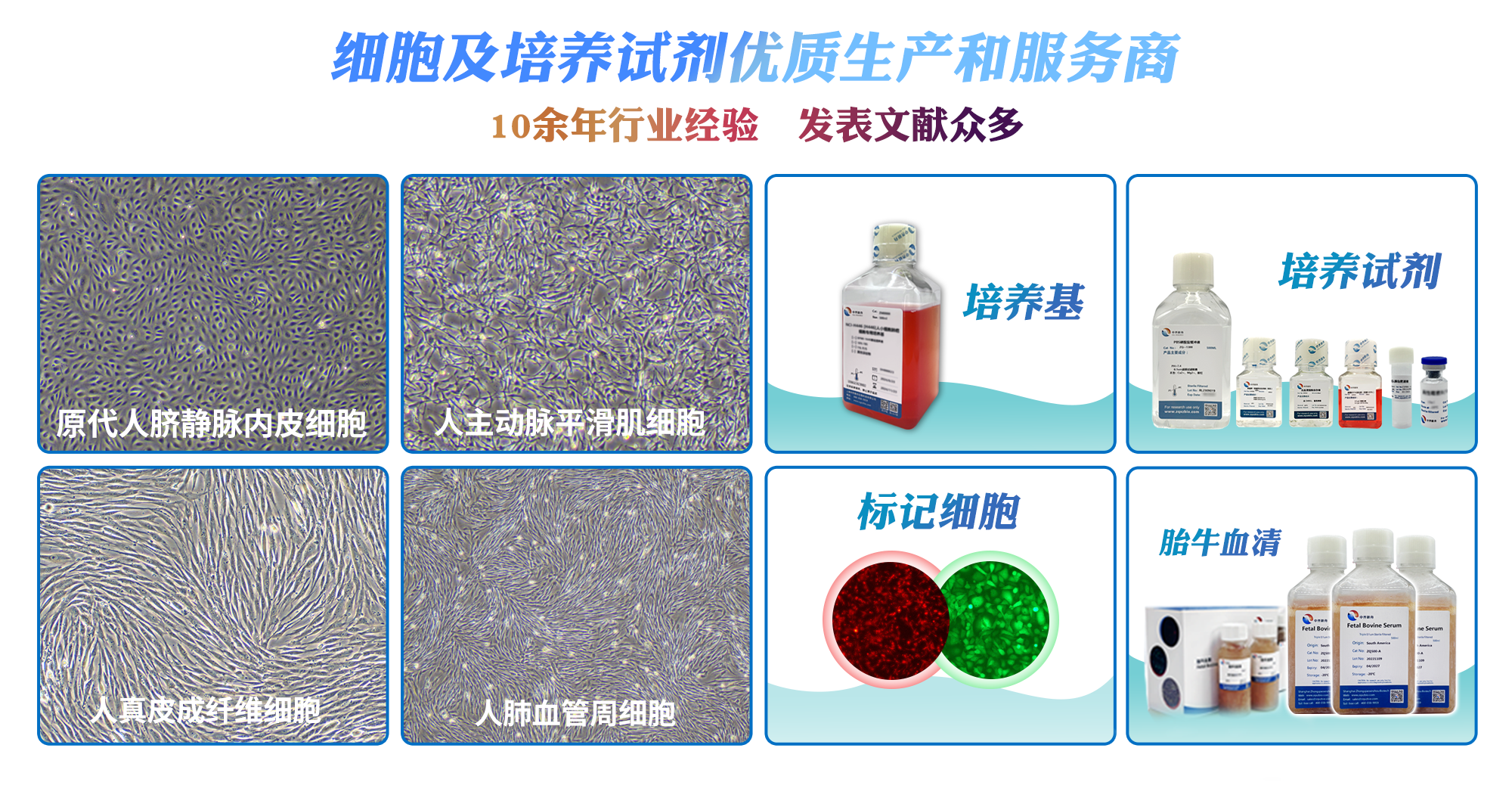
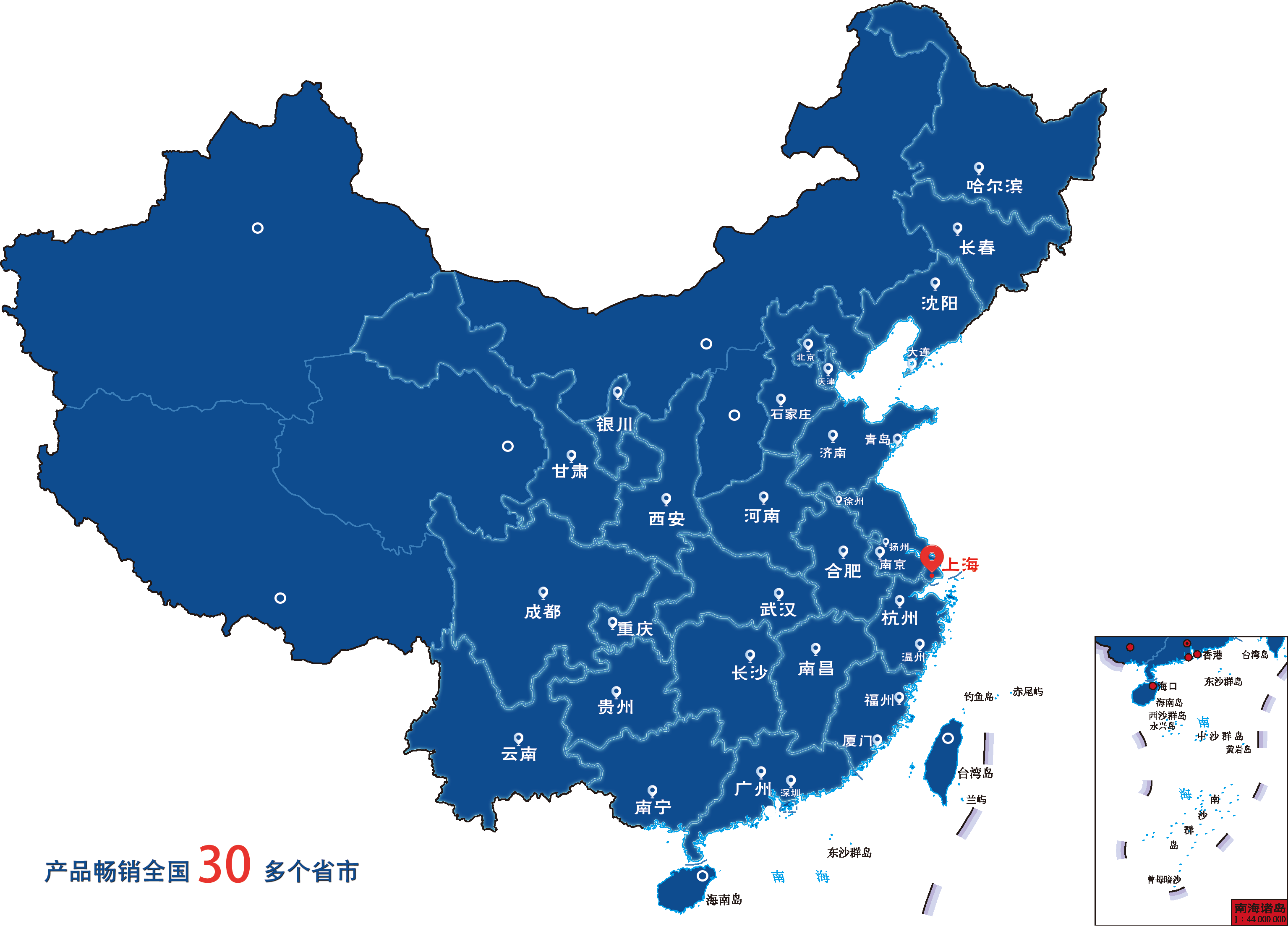
目前产品已经畅销国内30多个省市,与客户建立长期的合作伙伴关系,共同实现成功。全体员工将不懈努力,继续为科研人员提供优良的产品和服务,致力成为全球细胞培养领域的参与者。
企业愿景
致力于成为国内细胞培养基产业的佼佼者,生物医药领域上游原材料的优良提供商。
企业使命
成长为专业细胞系及原代细胞培养供应商、专业细胞培养基及培养试剂生产商。
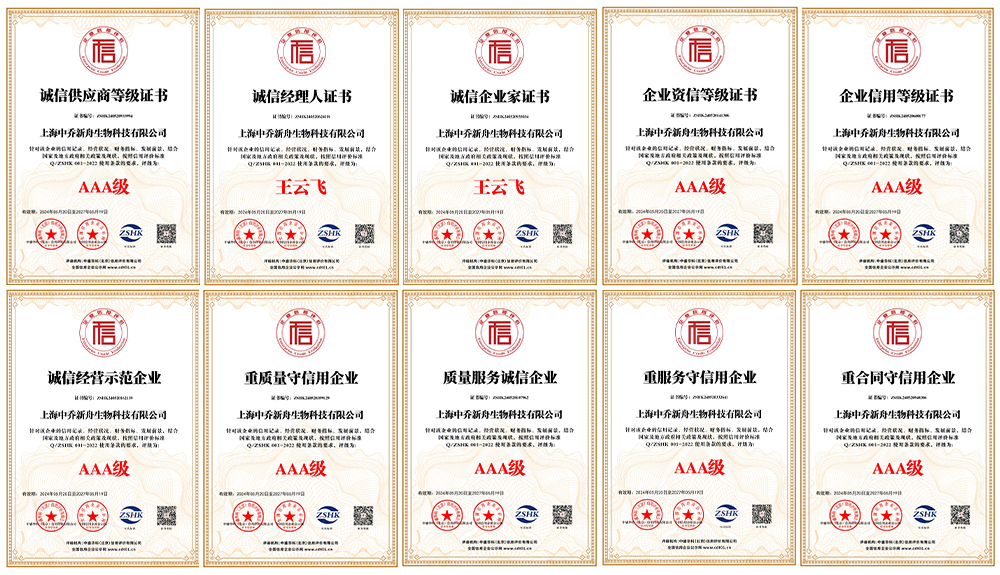
企业荣誉

风险提示:丁香通仅作为第三方平台,为商家信息发布提供平台空间。用户咨询产品时请注意保护个人信息及财产安全,合理判断,谨慎选购商品,商家和用户对交易行为负责。对于医疗器械类产品,请先查证核实企业经营资质和医疗器械产品注册证情况。
 文献和实验
文献和实验
PubMed=181343; DOI=10.1159/000149930
Klein G., Giovanella B.C., Westman A., Stehlin J.S. Jr., Mumford D.M.
An EBV-genome-negative cell line established from an American Burkitt lymphoma; receptor characteristics. EBV infectibility and permanent conversion into EBV-positive sublines by in vitro infection.
Intervirology 5:319-334(1975)
PubMed=62724; DOI=10.1002/ijc.2910180513
Klein G., Zeuthen J., Terasaki P.I., Billing R.J., Honig R., Jondal M., Westman A., Clements G.B.
Inducibility of the Epstein-Barr virus (EBV) cycle and surface marker properties of EBV-negative lymphoma lines and their in vitro EBV-converted sublines.
Int. J. Cancer 18:639-652(1976)
PubMed=175026; DOI=10.1002/ijc.2910170203
Fresen K.-O., zur Hausen H.
Establishment of EBNA-expressing cell lines by infection of Epstein-Barr virus (EBV)-genome-negative human lymphoma cells with different EBV strains.
Int. J. Cancer 17:161-166(1976)
PubMed=7316467; DOI=10.1111/j.1469-1809.1980.tb00953.x
Povey S., Jeremiah S., Arthur E., Steel M., Klein G.
Differences in genetic stability between human cell lines from patients with and without lymphoreticular malignancy.
Ann. Hum. Genet. 44:119-133(1980)
PubMed=6286763; DOI=10.4049/jimmunol.129.3.1336
Benjamin D., Magrath I.T., Maguire R.T., Janus C., Todd H.D., Parsons R.G.
Immunoglobulin secretion by cell lines derived from African and American undifferentiated lymphomas of Burkitt's and non-Burkitt's type.
J. Immunol. 129:1336-1342(1982)
PubMed=6231253; DOI=10.1002/ijc.2910330407
Ehlin-Henriksson B., Klein G.
Distinction between Burkitt lymphoma subgroups by monoclonal antibodies: relationships between antigen expression and type of chromosomal translocation.
Int. J. Cancer 33:459-463(1984)
PubMed=2985879; DOI=10.1016/0145-2126(85)90084-0
Drexler H.G., Gaedicke G., Minowada J.
Isoenzyme studies in human leukemia-lymphoma cell lines -- 1 carboxylic esterase.
Leuk. Res. 9:209-229(1985)
PubMed=2998993
Steel C.M., Morten J.E.N., Foster E.
The cytogenetics of human B lymphoid malignancy: studies in Burkitt's lymphoma and Epstein-Barr virus-transformed lymphoblastoid cell lines.
IARC Sci. Publ. 60:265-292(1985)
PubMed=3159941; DOI=10.1016/0145-2126(85)90134-1
Drexler H.G., Gaedicke G., Minowada J.
Isoenzyme studies in human leukemia-lymphoma cell lines -- III Beta-hexosaminidase (E.C. 3.2.1.30).
Leuk. Res. 9:549-559(1985)
PubMed=3874327; DOI=10.1016/0145-2126(85)90133-x
Drexler H.G., Gaedicke G., Minowada J.
Isoenzyme studies in human leukemia-lymphoma cells lines -- II. Acid phosphatase.
Leuk. Res. 9:537-548(1985)
PubMed=3518877; DOI=10.3109/07357908609038260
Fogh J.
Human tumor lines for cancer research.
Cancer Invest. 4:157-184(1986)
PubMed=2835030; DOI=10.1016/S0385-8146(87)80025-1
Takimoto T., Sato H., Ogura H., Miyazaki T.
Establishment of an Epstein-Barr virus (EBV) genome-positive subline of Ramos (Ramos/NPC) following infection of Ramos with nasopharyngeal carcinoma (NPC)-derived EBV.
Auris Nasus Larynx 14:87-92(1987)
PubMed=3026973; DOI=10.1002/ijc.2910390215
Ehlin-Henriksson B., Manneborg-Sandlund A., Klein G.
Expression of B-cell-specific markers in different Burkitt lymphoma subgroups.
Int. J. Cancer 39:211-218(1987)
PubMed=1850347; DOI=10.1210/endo-128-5-2266
Baglia L.A., Cruz D., Shaw J.E.
An Epstein-Barr virus-negative Burkitt lymphoma cell line (sfRamos) secretes a prolactin-like protein during continuous growth in serum-free medium.
Endocrinology 128:2266-2272(1991)
PubMed=1915267; DOI=10.1002/j.1460-2075.1991.tb07837.x
Farrell P.J., Allan G.J., Shanahan F., Vousden K.H., Crook T.
p53 is frequently mutated in Burkitt's lymphoma cell lines.
EMBO J. 10:2879-2887(1991)
PubMed=2052620; DOI=10.1073/pnas.88.12.5413
Gaidano G., Ballerini P., Gong J.Z., Inghirami G., Neri A., Newcomb E.W., Magrath I.T., Knowles D.M., Dalla-Favera R.
p53 mutations in human lymphoid malignancies: association with Burkitt lymphoma and chronic lymphocytic leukemia.
Proc. Natl. Acad. Sci. U.S.A. 88:5413-5417(1991)
PubMed=8316623; DOI=10.2307/3578190
Evans H.H., Ricanati M., Horng M.-F., Jiang Q.-Y., Mencl J., Olive P.L.
DNA double-strand break rejoining deficiency in TK6 and other human B-lymphoblast cell lines.
Radiat. Res. 134:307-315(1993)
PubMed=8344493; DOI=10.1096/fasebj.7.10.8344493
Bhatia K.G., Goldschmidts W., Gutierrez M.I., Gaidano G., Dalla-Favera R., Magrath I.T.
Hemi- or homozygosity: a requirement for some but not other p53 mutant proteins to accumulate and exert a pathogenetic effect.
FASEB J. 7:951-956(1993)
PubMed=8402660
O'Connor P.M., Jackman J., Jondle D., Bhatia K.G., Magrath I.T., Kohn K.W.
Role of the p53 tumor suppressor gene in cell cycle arrest and radiosensitivity of Burkitt's lymphoma cell lines.
Cancer Res. 53:4776-4780(1993)
PubMed=8515068; DOI=10.4049/jimmunol.150.12.5418
Jain V.K., Judde J.-G., Max E.E., Magrath I.T.
Variable IgH chain enhancer activity in Burkitt's lymphomas suggests an additional, direct mechanism of c-myc deregulation.
J. Immunol. 150:5418-5428(1993)
PubMed=7757991
Bae I., Fan S.-J., Bhatia K.G., Kohn K.W., Fornace A.J. Jr., O'Connor P.M.
Relationships between G1 arrest and stability of the p53 and p21Cip1/Waf1 proteins following gamma-irradiation of human lymphoma cells.
Cancer Res. 55:2387-2393(1995)
PubMed=8896424; DOI=10.1182/blood.V88.9.3562.bloodjournal8893562
Chapman C.J., Zhou J.X., Gregory C.D., Rickinson A.B., Stevenson F.K.
VH and VL gene analysis in sporadic Burkitt's lymphoma shows somatic hypermutation, intraclonal heterogeneity, and a role for antigen selection.
Blood 88:3562-3568(1996)
PubMed=9192833
Cherney B.W., Bhatia K.G., Sgadari C., Gutierrez M.I., Mostowski H.S., Pike S.E., Gupta G., Magrath I.T., Tosato G.
Role of the p53 tumor suppressor gene in the tumorigenicity of Burkitt's lymphoma cells.
Cancer Res. 57:2508-2515(1997)
PubMed=9225077; DOI=10.1016/S0145-2126(97)00126-4
Okano M.
High susceptibility of an Epstein-Barr virus-converted Burkitt's lymphoma cell line to cytotoxic drugs.
Leuk. Res. 21:469-471(1997)
PubMed=9473234; DOI=10.1182/blood.V91.5.1680
Klangby U., Okan I., Magnusson K.P., Wendland M., Lind P., Wiman K.G.
p16/INK4a and p15/INK4b gene methylation and absence of p16/INK4a mRNA and protein expression in Burkitt's lymphoma.
Blood 91:1680-1687(1998)
PubMed=9973220
Gutierrez M.I., Cherney B.W., Hussain A., Mostowski H.S., Tosato G., Magrath I.T., Bhatia K.G.
Bax is frequently compromised in Burkitt's lymphomas with irreversible resistance to Fas-induced apoptosis.
Cancer Res. 59:696-703(1999)
PubMed=10739008; DOI=10.1016/S0145-2126(99)00182-4
Inoue K., Kohno T., Takakura S., Hayashi Y., Mizoguchi H., Yokota J.
Frequent microsatellite instability and BAX mutations in T cell acute lymphoblastic leukemia cell lines.
Leuk. Res. 24:255-262(2000)
PubMed=10918597; DOI=10.1038/sj.onc.1203686
Bemark M., Neuberger M.S.
The c-MYC allele that is translocated into the IgH locus undergoes constitutive hypermutation in a Burkitt's lymphoma line.
Oncogene 19:3404-3410(2000)
PubMed=11226526; DOI=10.1016/S0145-2126(00)00121-1
Inoue K., Kohno T., Takakura S., Hayashi Y., Mizoguchi H., Yokota J.
Corrigendum to: Frequent microsatellite instability and BAX mutations in T cell acute lymphoblastic leukemia cell lines Leukemia Research 24 (2000),255-262.
Leuk. Res. 25:275-278(2001)
PubMed=12967475; DOI=10.1111/j.1349-7006.2003.tb01518.x
Maesako Y., Uchiyama T., Ohno H.
Comparison of gene expression profiles of lymphoma cell lines from transformed follicular lymphoma, Burkitt's lymphoma and de novo diffuse large B-cell lymphoma.
Cancer Sci. 94:774-781(2003)
PubMed=18211290; DOI=10.1111/j.1365-2184.2007.00500.x
Zander Balderud L., Bemark M.
Identification of genes deregulated during serum-free medium adaptation of a Burkitt's lymphoma cell line.
Cell Prolif. 41:136-155(2008)
PubMed=20922763; DOI=10.1002/pbc.22801
Kang M.H., Smith M.A., Morton C.L., Keshelava N., Houghton P.J., Reynolds C.P.
National Cancer Institute pediatric preclinical testing program: model description for in vitro cytotoxicity testing.
Pediatr. Blood Cancer 56:239-249(2011)
PubMed=22885699; DOI=10.1038/nature11378
Schmitz R., Young R.M., Ceribelli M., Jhavar S., Xiao W.-M., Zhang M.-L., Wright G., Shaffer A.L. III, Hodson D.J., Buras E., Liu X.-L., Powell J.I., Yang Y.-D., Xu W.-H., Zhao H., Kohlhammer H., Rosenwald A., Kluin P.M., Muller-Hermelink H.-K., Ott G., Gascoyne R.D., Connors J.M., Rimsza L.M., Campo E., Jaffe E.S., Delabie J., Smeland E.B., Ogwang M.D., Reynolds S.J., Fisher R.I., Braziel R.M., Tubbs R.R., Cook J.R., Weisenburger D.D., Chan W.C., Pittaluga S., Wilson W., Waldmann T.A., Rowe M., Mbulaiteye S.M., Rickinson A.B., Staudt L.M.
Burkitt lymphoma pathogenesis and therapeutic targets from structural and functional genomics.
Nature 490:116-120(2012)
PubMed=24590883; DOI=10.1002/gcc.22161
Murga Penas E.-M., Schilling G., Behrmann P., Klokow M., Vettorazzi E., Bokemeyer C., Dierlamm J.
Comprehensive cytogenetic and molecular cytogenetic analysis of 44 Burkitt lymphoma cell lines: secondary chromosomal changes characterization, karyotypic evolution, and comparison with primary samples.
Genes Chromosomes Cancer 53:497-515(2014)
PubMed=25960936; DOI=10.4161/21624011.2014.954893
Boegel S., Lower M., Bukur T., Sahin U., Castle J.C.
A catalog of HLA type, HLA expression, and neo-epitope candidates in human cancer cell lines.
OncoImmunology 3:e954893.1-e954893.12(2014)
PubMed=25485619; DOI=10.1038/nbt.3080
Klijn C., Durinck S., Stawiski E.W., Haverty P.M., Jiang Z.-S., Liu H.-B., Degenhardt J., Mayba O., Gnad F., Liu J.-F., Pau G., Reeder J., Cao Y., Mukhyala K., Selvaraj S.K., Yu M.-M., Zynda G.J., Brauer M.J., Wu T.D., Gentleman R.C., Manning G., Yauch R.L., Bourgon R., Stokoe D., Modrusan Z., Neve R.M., de Sauvage F.J., Settleman J., Seshagiri S., Zhang Z.-M.
A comprehensive transcriptional portrait of human cancer cell lines.
Nat. Biotechnol. 33:306-312(2015)
PubMed=25877200; DOI=10.1038/nature14397
Yu M., Selvaraj S.K., Liang-Chu M.M.Y., Aghajani S., Busse M., Yuan J., Lee G., Peale F.V., Klijn C., Bourgon R., Kaminker J.S., Neve R.M.
A resource for cell line authentication, annotation and quality control.
Nature 520:307-311(2015)
PubMed=26589293; DOI=10.1186/s13073-015-0240-5
Scholtalbers J., Boegel S., Bukur T., Byl M., Goerges S., Sorn P., Loewer M., Sahin U., Castle J.C.
TCLP: an online cancer cell line catalogue integrating HLA type, predicted neo-epitopes, virus and gene expression.
Genome Med. 7:118.1-118.7(2015)
PubMed=28196595; DOI=10.1016/j.ccell.2017.01.005
Li J., Zhao W., Akbani R., Liu W.-B., Ju Z.-L., Ling S.-Y., Vellano C.P., Roebuck P., Yu Q.-H., Eterovic A.K., Byers L.A., Davies M.A., Deng W.-L., Gopal Y.N.V., Chen G., von Euw E.M., Slamon D.J., Conklin D., Heymach J.V., Gazdar A.F., Minna J.D., Myers J.N., Lu Y.-L., Mills G.B., Liang H.
Characterization of human cancer cell lines by reverse-phase protein arrays.
Cancer Cell 31:225-239(2017)
PubMed=31160637; DOI=10.1038/s41598-019-44491-x
Quentmeier H., Pommerenke C., Dirks W.G., Eberth S., Koeppel M., MacLeod R.A.F., Nagel S., Steube K., Uphoff C.C., Drexler H.G.
The LL-100 panel: 100 cell lines for blood cancer studies.
Sci. Rep. 9:8218-8218(2019)
亦可简称B细胞。来源于骨髓的多能干细胞。在禽类是在法氏囊内发育生成,故又称囊依赖淋巴细胞(bursa dependent lymphocyte)。在哺乳类是在类囊结构的骨髓等组织中发育的。又称骨髓依赖淋巴细胞。从骨髓来的干细胞或前B细胞,在迁入法氏囊或类囊器官后,逐步分化为有免疫潜能的B细胞。成熟的B细胞经外周血迁出,进入脾脏、淋巴结,主要分布于脾小结、脾索及淋巴小结、淋巴索及消化道粘膜下的淋巴小结中,受抗原刺激后,分化增殖为浆细胞,合成抗体,发挥体液免疫的功能。B细胞
处理的瘤细胞作为肿瘤疫苗 肿瘤疫苗包括灭活的自体肿瘤细胞、提取的肿瘤抗原和人工合成的肿瘤抗原肽,通过给患者免疫接种,激发患者自身对肿瘤细胞的特异性免疫应答,清除肿瘤而不损伤周围正常细胞。肿瘤疫苗还可诱发免疫记忆细胞,产生长期的免疫效应,防止肿瘤的转移和复发。是一种理想的特异性主动免疫治疗手段。 肿瘤疫苗激活T细胞作用机制 肿瘤细胞表达的肿瘤抗原经APC加工处理,通过MHCI类和Ⅱ类分子提呈至细胞表面,分别激活CD
人前列腺癌细胞 RAJI 黑人Burkitt淋巴瘤 RAMOS 人B淋巴细胞瘤 RAMOS(RA.1) 人B淋巴细胞瘤 RPMI-8226 人多发骨髓瘤细胞 SaOS-2 人骨肉瘤细胞 SF126 人脑瘤 SF17 人脑瘤 SF17 人脑瘤 SF763 人脑瘤 SF767 人脑瘤 SH-SY5Y 人骨髓神经母细胞瘤 SK-BR-3 人乳腺癌细胞 SK-HEL-1 人皮肤黑色素瘤细胞 SK-N-SH 人神经母细胞瘤 SK-OV-3 人卵巢
 技术资料
技术资料暂无技术资料 索取技术资料

