

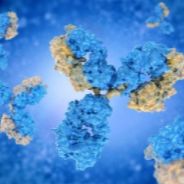
- ¥1280 - 1980
- YLKBIO
- YLK-KT2440D
- 国产/进口
- 2025年07月10日
- 见产品详情
- 兔
- /

企业认证
相关产品推荐更多 >
万千商家帮你免费找货
0 人在求购买到急需产品
- 详细信息
- 文献和实验
- 技术资料
- 供应商:
优利科(上海)生命科学有限公司
- 库存:
100
- 靶点:
详询
- 级别:
科研
- 目录编号:
/
- 克隆性:
多克隆
- 抗原来源:
详见说明书
- 保质期:
1年
- 抗体英文名:
Anti-IF3EI
- 抗体名:
IF3EI抗体
- 标记物:
详询
- 宿主:
兔
- 适应物种:
/
- 免疫原:
见产品详情
- 亚型:
IgG
- 形态:
冻干或液体
- 应用范围:
见产品详情
- 保存条件:
-20℃
- 浓度:
详询
- 规格:
详询

| 英文名称 Anti-IF3EI |
| 中文名称 真核翻译起始因子3亚基L蛋白抗体 |
| 别 名 eIEF associated protein HSPC021; EIF3EIP; eIF3l; eif3l; EIF3L_HUMAN; EIF3S11; EIF3S6IP; Eukaryotic translation initiation factor 3 subunit 6 interacting; Eukaryotic translation initiation factor 3 subunit 6-interacting protein; Eukaryotic translation initiation factor 3 subunit E-interacting protein; Eukaryotic translation initiation factor 3 subunit L; eukaryotic translation initiation factor 3, subunit E interacting; HSPC021; HSPC025; MSTP005. |
| 浓 度 1mg/1ml |
| 规 格 0.2ml/200μg |
| 抗体来源 Rabbit |
| 克隆类型 polyclonal |
| 交叉反应 Human, Mouse, Rat, Chicken, Dog, Pig, Cow, Horse, Rabbit, Sheep |
| 产品类型 一抗 |
研究领域 细胞生物 免疫学 染色质和核信号  |
| 蛋白分子量 predicted molecular weight: 67kDa |
| 性 状 Lyophilized or Liquid |
| 免 疫 原 KLH conjugated synthetic peptide derived from human IF3EI |
| 亚 型 IgG |
| 纯化方法 affinity purified by Protein A |
| 储 存 液 Preservative: 15mM Sodium Azide, Constituents: 1% BSA, 0.01M PBS, pH 7.4 |
| 产品应用 WB=1:100-500 ELISA=1:500-1000 IP=1:20-100 IHC-P=1:100-500 IHC-F=1:100-500 ICC=1:100-500 IF=1:100-500 |
| (石蜡切片需做抗原修复) |
| not yet tested in other applications. |
| optimal dilutions/concentrations should be determined by the end user. |
保存条件 Store at -20 °C for one year. Avoid repeated freeze/thaw cycles. The lyophilized antibody is stable at room temperature for at least one month and for greater than a year when kept at -20°C. When reconstituted in sterile pH 7.4 0.01M PBS or diluent of antibody the antibody is stable for at least two weeks at 2-4 °C.  |
| Important Note This product as supplied is intended for research use only, not for use in human, therapeutic or diagnostic applications. |
| 产品介绍 |
| Function : Component of the eukaryotic translation initiation factor 3 (eIF-3) complex, which is required for several steps in the initiation of protein synthesis. The eIF-3 complex associates with the 40S ribosome and facilitates the recruitment of eIF-1, eIF-1A, eIF-2:GTP:methionyl-tRNAi and eIF-5 to form the 43S preinitiation complex (43S PIC). The eIF-3 complex stimulates mRNA recruitment to the 43S PIC and scanning of the mRNA for AUG recognition. The eIF-3 complex is also required for disassembly and recycling of post-termination ribosomal complexes and subsequently prevents premature joining of the 40S and 60S ribosomal subunits prior to initiation. |
| Subunit : Component of the eukaryotic translation initiation factor 3 (eIF-3) complex, which is composed of 13 subunits: EIF3A, EIF3B, EIF3C, EIF3D, EIF3E, EIF3F, EIF3G, EIF3H, EIF3I, EIF3J, EIF3K, EIF3L and EIF3M. The eIF-3 complex appears to include 3 stable modules: module A is composed of EIF3A, EIF3B, EIF3G and EIF3I; module B is composed of EIF3F, EIF3H, and EIF3M; and module C is composed of EIF3C, EIF3D, EIF3E, EIF3K and EIF3L. EIF3C of module C binds EIF3B of module A and EIF3H of module B, thereby linking the three modules. EIF3J is a labile subunit that binds to the eIF-3 complex via EIF3B. The eIF-3 complex interacts with RPS6KB1 under conditions of nutrient depletion. Mitogenic stimulation leads to binding and activation of a complex composed of MTOR and RPTOR, leading to phosphorylation and release of RPS6KB1 and binding of EIF4B to eIF-3. Interacts with RRN3 (By similarity). |
| Subcellular Location : Cytoplasm (By similarity). |
| Similarity : Belongs to the eIF-3 subunit L family. |
Database links : UniProtKB/Swiss-Prot: Q9Y262.1 |
| CD73 (5´-nucleotidase cytosolicⅡ) 胞浆-5´-核苷酸酶-Ⅱ 抗原 |
| OGP (Ostegenic Growth Peptide) 成骨生长肽 (骨生长激素肽)(多肽) |
| OPN 骨桥蛋白(多肽抗原) |
| P53 肿瘤抑制基因(抗原) |
| PACAP-27/38 腺苷酸环化酶激活肽-27/38(抗原) |
| PACAP-38 腺苷酸环化酶激活肽-38(抗原) |
| PACAP/VIP receptor 腺苷酸环化酶激活肽/血管活性肠肽受体(抗原) |
| PACAP receptor-I 腺苷酸环化酶激活肽受体(抗原) |
| PADI4 (HL-60 PAD)(Protein-arginine deiminase type IV,PADI 4,PAD I4 ) 关节炎相关基因 |
| PDGF-A 血小板源性生长因子-1(抗原) |
| PDGF-B 血小板源性生长因子-B(抗原) |
| PDGF-R-A 血小板源性生长因子受体-A(抗原) |
| PDGF-R-B 血小板源性生长因子受体-B(抗原) |
| PMP-22(Peripheral Myelin Protein) 外周髓鞘蛋白-22 多肽 |
| PI3K 磷脂酰肌醇激酶(抗原) |
风险提示:丁香通仅作为第三方平台,为商家信息发布提供平台空间。用户咨询产品时请注意保护个人信息及财产安全,合理判断,谨慎选购商品,商家和用户对交易行为负责。对于医疗器械类产品,请先查证核实企业经营资质和医疗器械产品注册证情况。
 文献和实验
文献和实验说明其它氨基酰tRNA合成酶也识别同功tRNA组中相同的副密码子。另外副密码子也没有固定的位置,也可能并不止一个碱基对。 (二)多肽链合成的起始 核蛋白体大小亚基,mRNA起始tRNA和起始因子共同参与肽链合成的起始。 1、大肠杆菌细胞翻译起始复合物形成的过程: (1)核糖体30S小亚基附着于mRNA起始信号部位:原核生物中每一个mRNA都具有其核糖体结合位点,它是位于AUG上游8-13个核苷酸处的一个短片段叫做SD序列。这段序列正好与30S小亚基中的16s rRNA
玉米Proline responding 1(pro1)突变在蛋白合成和细胞周期调控中起到关键作用
, three independent biological replicates were performed. Bars represent average values ± SD,n=3 replicates (** refers to P pro1突变体中脯氨酸缺乏引起的空载tRNApro AGG累积从而造成了eIF2α)的磷酸化脯氨酸的缺乏造成pro1突变体细胞中空载tRNApro AGG累积,由此引发真核生物翻译起始因子2的α亚基(eIF2α)磷酸化(Figure 4A, B, C, D, and E),造成突变体中
。形成较长的新生序列。 + q' k- B0 E3 o* H j& j * J) }+ D% u$ u8 v5 e3 r4、cDNA序列的开放阅读框分析 / z; S/ O3 i$ Y) x5 v. P 大量的实验证明,在真核生物起始蛋白质合成时,40S核糖体亚基及有关合成起始因子首先与mRNA模板靠近5`末端处结合,然后向3`末端滑行,发现AUG起始密码子时,与60S大亚基结合形成80S起始复合


