

- ¥1280 - 1980
- YLKBIO
- YLK-KT2220D
- 国产/进口
- 2025年07月15日
- WB=1:100-500 ELISA=1:500-1000 IP=1:20-100 IHC-P=1:100-500 IHC-F=1:100-500 IF=1:100-500
- 兔
- /

企业认证




万千商家帮你免费找货
0 人在求购买到急需产品
- 详细信息
- 文献和实验
- 技术资料
- 供应商:
优利科(上海)生命科学有限公司
- 库存:
55
- 靶点:
详询
- 级别:
科研
- 目录编号:
/
- 克隆性:
多克隆
- 抗原来源:
详见说明书
- 保质期:
1年
- 抗体英文名:
Anti-Phospho-INPPL1(Tyr1135)
- 抗体名:
Phospho-INPPL1(Tyr1135)抗体
- 标记物:
详询
- 宿主:
兔
- 适应物种:
/
- 免疫原:
KLH conjugated Synthesised phosphopeptide derived from human SHIP2 around the phosphorylation site of Tyr1135
- 亚型:
IgG
- 形态:
Lyophilized or Liquid
- 应用范围:
WB=1:100-500 ELISA=1:500-1000 IP=1:20-100 IHC-P=1:100-500 IHC-F=1:100-500 IF=1:100-500
- 保存条件:
-20℃
- 浓度:
1mg/ml
- 规格:
详询

| 英文名称 Anti-Phospho-INPPL1(Tyr1135) |
| 中文名称 磷酸化肌醇聚磷酸盐磷酸酶样蛋白1抗体 |
| 别 名 4; 5-trisphosphate 5-phosphatase 2; 51C protein; EC 3.1.3.n1; inositol polyphosphate phosphatase like 1; Inositol polyphosphate phosphatase like protein 1; Inositol polyphosphate phosphatase-like protein 1; INPPL-1; INPPL1; Phosphatidylinositol 3; Phosphatidylinositol 3,4,5 trisphosphate 5 phosphatase 2; Protein 51C; SH2 domain containing inositol 5' phosphatase 2; SH2 domain-containing inositol 5''-phosphatase 2; SH2 domain-containing inositol phosphatase 2; SHIP-2; SHIP2; SHIP2_HUMAN. |
| 浓 度 1mg/1ml |
| 规 格 0.1ml/100μg |
| 抗体来源 Rabbit |
| 克隆类型 polyclonal |
| 交叉反应 Human, Mouse, Dog, Cow, Horse, Rabbit |
| 产品类型 一抗 磷酸化抗体 |
研究领域 肿瘤 心血管 免疫学 神经生物学 信号转导 生长因子和激素 激酶和磷酸酶 细胞骨架 新陈代谢 细胞外基质  |
| 蛋白分子量 predicted molecular weight: 139kDa |
| 性 状 Lyophilized or Liquid |
| 免 疫 原 KLH conjugated Synthesised phosphopeptide derived from human SHIP2 around the phosphorylation site of Tyr1135 |
| 亚 型 IgG |
| 纯化方法 affinity purified by Protein A |
| 储 存 液 0.01M PBS, pH 7.4 with 10 mg/ml BSA and 0.1% Sodium azide |
| 产品应用 WB=1:100-500 ELISA=1:500-1000 IP=1:20-100 IHC-P=1:100-500 IHC-F=1:100-500 IF=1:100-500 |
| (石蜡切片需做抗原修复) |
| not yet tested in other applications. |
| optimal dilutions/concentrations should be determined by the end user. |
保存条件 Store at -20 °C for one year. Avoid repeated freeze/thaw cycles. The lyophilized antibody is stable at room temperature for at least one month and for greater than a year when kept at -20°C. When reconstituted in sterile pH 7.4 0.01M PBS or diluent of antibody the antibody is stable for at least two weeks at 2-4 °C. 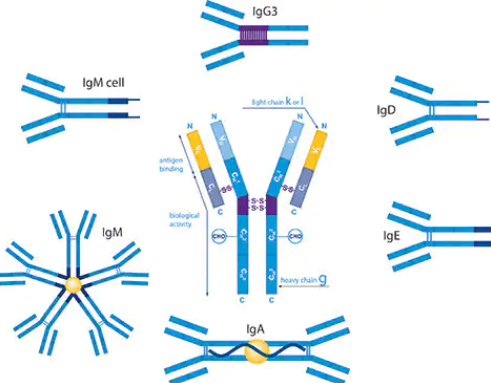 |
| Important Note This product as supplied is intended for research use only, not for use in human, therapeutic or diagnostic applications. |
| 产品介绍 The steady state of protein tyrosyl phosphorylation in cells is regulated by the opposing action of tyrosine kinases and protein tyrosine phosphatases (PTPs). Several groups have independently identified a non transmembrane PTP, designated SHPTP1 (also known as PTP1C, HCP and SHP), which is primarily expressed in hematopoietic cells and characterized by the presence of two SH2 domains N terminal to the PTP domain. A second and much more widely expressed PTP with SH2 domains, SHPTP2 (also designated PTP1D and Syp), has been identified. SHP2 is a protein tyrosine phosphatase that is widely expressed and plays a regulatory role in various cell signaling events that are important for many cell functions, such as mitogenic activation, metabolic control, transcription regulation, and cell migration. |
| Function : Phosphatidylinositol (PtdIns) phosphatase that specifically hydrolyzes the 5-phosphate of phosphatidylinositol-3,4,5-trisphosphate (PtdIns(3,4,5)P3) to produce PtdIns(3,4)P2, thereby negatively regulating the PI3K (phosphoinositide 3-kinase) pathways. Plays a central role in regulation of PI3K-dependent insulin signaling, although the precise molecular mechanisms and signaling pathways remain unclear. While overexpression reduces both insulin-stimulated MAP kinase and Akt activation, its absence does not affect insulin signaling or GLUT4 trafficking. Confers resistance to dietary obesity. May act by regulating AKT2, but not AKT1, phosphorylation at the plasma membrane. Part of a signaling pathway that regulates actin cytoskeleton remodeling. Required for the maintenance and dynamic remodeling of actin structures as well as in endocytosis, having a major impact on ligand-induced EGFR internalization and degradation. Participates in regulation of cortical and submembraneous actin by hydrolyzing PtdIns(3,4,5)P3 thereby regulating membrane ruffling. Regulates cell adhesion and cell spreading. Required for HGF-mediated lamellipodium formation, cell scattering and spreading. Acts as a negative regulator of EPHA2 receptor endocytosis by inhibiting via PI3K-dependent Rac1 activation. Acts as a regulator of neuritogenesis by regulating PtdIns(3,4,5)P3 level and is required to form an initial protrusive pattern, and later, maintain proper neurite outgrowth. Acts as a negative regulator of the FC-gamma-RIIA receptor (FCGR2A). Mediates signaling from the FC-gamma-RIIB receptor (FCGR2B), playing a central role in terminating signal transduction from activating immune/hematopoietic cell receptor systems. Involved in EGF signaling pathway. Upon stimulation by EGF, it is recruited by EGFR and dephosphorylates PtdIns(3,4,5)P3. Plays a negative role in regulating the PI3K-PKB pathway, possibly by inhibiting PKB activity. Down-regulates Fc-gamma-R-mediated phagocytosis in macrophages independently of INPP5D/SHIP1. In macrophages, down-regulates NF-kappa-B-dependent gene transcription by regulating macrophage colony-stimulating factor (M-CSF)-induced signaling. May also hydrolyze PtdIns(1,3,4,5)P4, and could thus affect the levels of the higher inositol polyphosphates like InsP6 |
| Subunit : Interacts with tyrosine phosphorylated form of SHC1, Interacts with EGFR. Upon stimulation by the EGF signaling pathway, it forms a complex with SHC1 and EGFR. Interacts with cytoskeletal protein SORBS3/vinexin, promoting its localization to the periphery of cells. Forms a complex with filamin (FLNA or FLNB), actin, GPIb (GP1BA or GP1BB) that regulates cortical and submembraneous actin. Interacts with c-Met/MET, when c-Met/MET is phosphorylated on 'Tyr-1356'. Interacts with p130Cas/BCAR1. Interacts with CENTD3/ARAP3 via its SAM domain. Interacts with c-Cbl/CBL and CAP/SORBS1. Interacts with activated EPHA2 receptor. Interacts with receptors FCGR2A and FCGR2B. Interacts with tyrosine kinases ABL1 and TEC. Interacts with CSF1R. |
| Subcellular Location : Cytoplasm, cytosol. Cytoplasm, cytoskeleton, actin patch. Membrane; Peripheral membrane protein. |
| Tissue Specificity : Widely expressed, most prominently in skeletal muscle, heart and brain. Present in platelets. Expressed in transformed myeloid cells and in primary macrophages, but not in peripheral blood monocytes. |
| Post-translational modifications : Tyrosine phosphorylated by the members of the SRC family after exposure to a diverse array of extracellular stimuli such as insulin, growth factors such as EGF or PDGF, chemokines, integrin ligands and hypertonic and oxidative stress. May be phosphorylated upon IgG receptor FCGR2B-binding. Phosphorylated at Tyr-986 following cell attachment and spreading. Phosphorylated at Tyr-1162 following EGF signaling pathway stimulation. Phosphorylated at Thr-958 in response to PDGF. |
| DISEASE : Defects in INPPL1 may be a cause of susceptibility to type 2 diabetes mellitus non-insulin dependent (NIDDM) [MIM:125853]. |
| Note=Genetic variations in INPPL1 may be a cause of susceptibility to metabolic syndrome. Metabolic syndrome is characterized by diabetes, insulin resistance, hypertension, and hypertriglyceridemia is absent. |
| Similarity : Belongs to the inositol 1,4,5-trisphosphate 5-phosphatase family. |
| Contains 1 SAM (sterile alpha motif) domain. |
| Contains 1 SH2 domain. |
| Database links : UniProtKB/Swiss-Prot: O15357.2 |
SHP2(SH-PTP2)参与多种细胞内信号传导 如MAP kinase、 PI3k等途径,SHP2也是许多其他原癌基因信号通路的重要组成部分,在细胞的增殖及分化等过程扮演重要的角色. |
| Anti-IGFBP-2 (Insulin-like Growth Factor Binding Protein 2) 胰岛素样生长因子结合蛋白-2抗体 |
| Anti-IGFBP-5/IBP5 ( Insulin-like Growth Factor Binding Protein 5) 胰岛素样生长因子结合蛋白-5抗体 |
| Anti-IGF-I( Insulin-like Growth Factor-I ) 胰岛素样生长因子-I抗体 |
| Anti-IGF-II( Insulin-like Growth Factor-II ) 胰岛素样生长因子-II抗体 |
| IGF-IIBP3(Insulinlike growth factor 2 mRNA binding protein 3) 胰岛素样生长因子2 mRNA 结合蛋白3抗体 |
| Anti-IKB β (Inhibitor of K B) KB抑制蛋白抗体 |
| Anti-IKB α (Inhibitor of KBα) KB抑制蛋白α抗体 |
| Anti-IKI3 family protein 拟南芥IKI3抗体 |
| Anti-IL-10(Interleukin-10) 白介素10抗体 |
| anti-IL-12(Interleukin-12) 白介素12抗体(白细胞介素-12) |
| Anti-IL-13(Interleukin-13) 白介素13抗体 |
| anti-IL-16/LCF(interleukin-16)(Lymphocyte Chemotactic Factor) 白细胞介素-16抗体 |
| Anti-IL-17(Interleukin-17) 白介素-17抗体 |
风险提示:丁香通仅作为第三方平台,为商家信息发布提供平台空间。用户咨询产品时请注意保护个人信息及财产安全,合理判断,谨慎选购商品,商家和用户对交易行为负责。对于医疗器械类产品,请先查证核实企业经营资质和医疗器械产品注册证情况。
 文献和实验
文献和实验CRISPR/Cas9 基因敲除实验 | 如何确定目标基因?
,NCBI 在前面:NCBI_PTEN这边主要表明 PTEN 是一个带有类张力蛋白结构域的双特异性蛋白酪氨酸磷酶。和其他磷酸酶不一样(其他磷酸酶磷酸化蛋白后呈现激活状态),PTEN 磷酸酶催化底物磷酸化,从而负性调控细胞内磷脂酰肌醇- 3、4、5 -三磷酸腺苷(听着像一个信号传导用的什子),并且负性调控 AKT/PKB 信号通路,从而起到肿瘤抑制因子的作用。其次,由非典型 (CUG) 上游起始位点的使用产生一个较长的同工异构体(PTEN-long 或者 PTENα),该异构体通过亮氨酸启动翻译
磷酸化才能完全激活。目前已知另一个含有PH结构域的丝氨酸/苏氨酸激酶,即三磷酸肌醇依赖的蛋白激酶1(3―phosphoinositide―dependentproteinkinasel,PDKl),它能催化Akt上Thr308位点的磷酸化。Thr308的磷酸化足以激活Akt,但要达到最大活性还需要Ser473位点的磷酸化。 Akt的激活会引起多种生物学效应,包括细胞生长、增殖和细胞存活。人们对Akt在细胞存活中的作用了解多来自于Akt负抑制突变体(dominant negative
,这些疾病表现的异常性是形成了分子间β折叠链-片层联结,或许相当于抑丝酶的环-片层联结[5]。 (5)β-淀粉样蛋白(β-amyloid protein,Aβ)[6] 老年性痴呆(AD)和Down氏综合征的病理特征是大脑皮层出现老年斑(SP)和神经原纤维缠结(NFT)。β-淀粉样前体蛋白(APP)的水解产物Aβ是构成SP的主要细胞外蛋白质成分,由39~43个氨基酸组成,具有β折迭构型。NFT则是由超磷酸化tau蛋白自聚成不溶性的双螺旋丝(PHF)形成的。tau蛋白是一种含磷糖蛋白,其一级结构中Pro


