

- 询价
- 近岸蛋白(Novoprotein)

- 中国
- DC633
- 2025年11月08日

企业认证
相关产品推荐更多 >
万千商家帮你免费找货
0 人在求购买到急需产品
- 详细信息
- 文献和实验
- 技术资料
- 英文名:
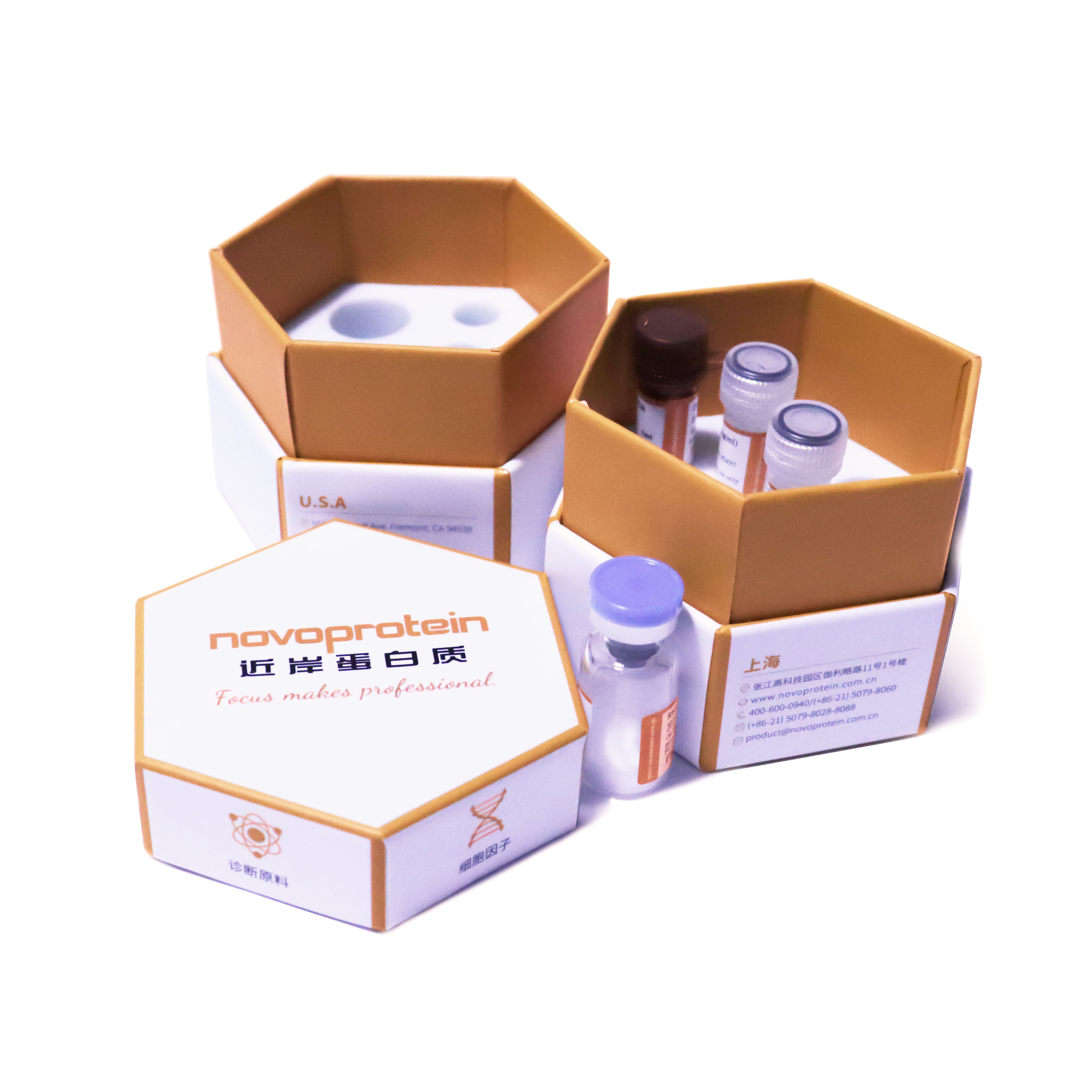
Human SAA1 (诊断原料,感染类)
Recombinant Human SAA1
Catalog #: DC633 Derived From: E.coli
Description:
Recombinant Human Serum Amyloid A1/SAA1 (N-6His) is produced by E.coli expression system and the target gene encoding Arg19-Tyr122 is expressed with a 6His tag at the N-terminus.
Accession: AAH07022.1
Names(Known as):Serum Amyloid A-1 Protein; SAA; SAA1
Quality Control:
Mol Mass: 13.2kDa AP Mol Mass: 14kDa, reducing conditions
Purity: Greater than 95% as determined by reducing SDS-PAGE.
Formulation:
Supplied as a 0.2 μm filtered solution of 20mM Tris-HCl,150mM NaCl,1mM EDTA, pH 8.0.
Shipping:
The product is shipped on dry ice pack.Upon receipt, store it immediately at the temperature listed below.
Storage:
Reconstituted protein solution should be stored at ≤ -20°C.
Purification:
Affinity purification chromatography.
Immunoreactivity:
Confirmed by reaction with monoclonal antibodies specific to SAA1.
Application:
Immunogen, calibrator or standard.
Background:
Serum Amyloid A1 Protein (SAA1) is an acute phase apolipoprotein reactant that is produced predominantly by hepatocytes and is under the regulation of inflammatory cytokines. SAA is produced mainly in the liver and circulates in low levels in the blood. SAA may play a role in the immune system and facilitate the repair of injured tissues, it also acts as an antibacterial agent, and signals the migration of germ-fighting cells to sites of infection. SAA also functions as an apolipoprotein of the HDL complex. The SAA cleavage product designated amyloid protein A is deposited systemically as amyloid in vital organs such as the liver, spleen, and kidneys in chronic inflammatory diseases patients. These deposits are extremely insoluble and resistant to proteolysis; they disrupt tissue structure and compromise performance.
FOR RESEARCH OR FURTHER MANUFACTURING USE ONLY
风险提示:丁香通仅作为第三方平台,为商家信息发布提供平台空间。用户咨询产品时请注意保护个人信息及财产安全,合理判断,谨慎选购商品,商家和用户对交易行为负责。对于医疗器械类产品,请先查证核实企业经营资质和医疗器械产品注册证情况。
 文献和实验
文献和实验【摘要】如果未经治疗,大多数感染了人类免疫缺陷病毒(HIV)者最终进展为爱滋病患者。罕见个人('精英控制者')在未经治疗时维持艾滋病毒RNA在非常低的水平,从而使疾病恶化和传染的可能性不大。某些人类白细胞抗原I类等位基因在精英控制者富集,和检测到的HLA-B57最有相关性。由于HLA分子呈递病毒多肽,激活CD8 + T细胞,这是一种监控HIV的免疫介导机制。在这里,我们描述HLA - B57分子的多肽结合特性如何影响胸腺的发展,如此,相对于其他HLA限制性T细胞,在B57的限制克隆较大
因素。与对照组类器官相比,患者源性类器官中的极化神经前体细胞增殖减少、分化提前;此外,对照组类器官中 CDK5RAP2 的敲除导致了类似的表型,这表明 CDK5RAP2 功能的丧失是人类小头畸形症的病因之一【2】。这项研究是第一个使用脑类器官来模拟神经发育障碍的例子,并通过 CRISPR/Cas9 技术将脑类器官进行基因编辑,为人类了解脑类疾病的机制奠定了基础。 人类脑类器官模型同样为研究感染病的发病机制提供了生理学相关的平台。在 ZIKV 病毒肆虐期间,有人提出包括小头畸形在内的神经系统疾病可能
理解每种肝病的表型和损伤器官的机制,我们需要建立复杂的体外肝模型,以便于更好地进行肝脏相关的疾病和毒性研究。 本篇文章基于 Nature protocol【1】和 Journal of hepatology【2】发表的两篇文章,整理了人类诱导多能干细胞(human iPSCs)来源的肝脏类器官培养方案。 图 1. 人 iPSCs 来源的肝类器官培养方案【2】 细胞来源 Human iPSCs 培养基配方 MEFs培养基 iPSCs(I)培养基 iPSCs(II)培养
 技术资料
技术资料暂无技术资料 索取技术资料

