- 移动端


Olink Proteomics品牌商
1 年
手机商铺
- NaN
- 0
- 1
- 2
- 1

推荐产品


公司新闻/正文
Olink文章快速突破三千篇|靶向蛋白质组学发文趋势大盘点
271 人阅读发布时间:2025-09-29 11:33
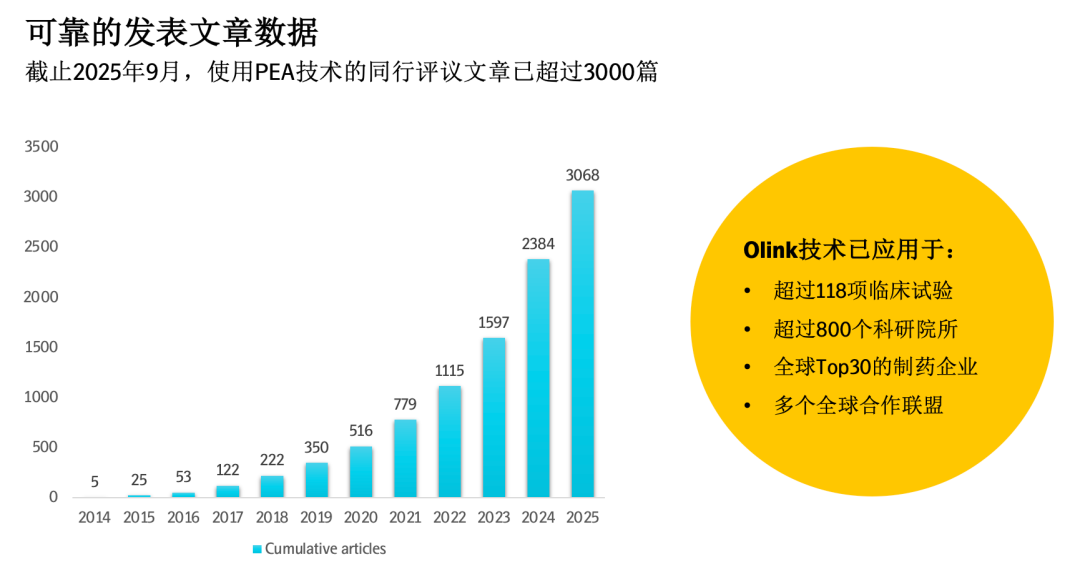
Olink发文趋势一:高分文章占比逐年升高
在过去的十年间,Olink发表文章实现了从个位数(2014年5篇)到年发表量突破700篇(2024年和2025年前三季度),更呈现出“量质齐升”的趋势。高分文章(IF>5.9)占比从2014-2015年的25%,攀升至2016-2020年的35%,并在2021年后持续稳定在50%左右。这一趋势有力地证明了Olink技术在生命科学和临床研究中的价值正获得日益广泛的认可与应用。
值得一提的是,2025年前三季度,Olink在《Nature》及其子刊的文章发表数量已突破60篇,其中,采用Explore 平台发表的文章数量为41篇,采用Target 96平台发表的文章数量为17篇,采用Target 48发表的文章数量为2篇。部分亮点文章列表如下:
|
|
|
|
A generative AI-discovered TNIK inhibitor for idiopathic pulmonary fibrosis: a randomized phase 2a trial |
Nature Medicine, DOI: 10.1038/s41591-025-03743-2 |
|
Integrating the environmental and genetic architectures of aging and mortality |
Nature Medicine, DOI: 10.1038/s41591-024-03483-9 |
|
Genetic and molecular landscape of comorbidities in people living with HIV |
Nature Medicine, DOI: 10.1038/s41591-025-03887-1 |
|
A plasma proteomics-based candidate biomarker panel predictive of amyotrophic lateral sclerosis |
Nature Medicine, DOI: 10.1038/s41591-025-03890-6 |
|
Whole-genome sequencing analysis identifies rare, large-effect noncoding variants and regulatory regions associated with circulating protein levels |
Nature Genetics, DOI: 10.1038/s41588-025-02095-4 |
|
Genetics of circulating proteins in newborn babies at high risk of type 1 diabetes |
Nature Communications, DOI: 10.1038/s41467-025-58972-3 |
|
Comparative studies of 2168 plasma proteins measured by two affinity-based platforms in 4000 Chinese adults |
Nature Communications, DOI: 10.1038/s41467-025-56935-2 |
|
Proteomic signature of HIV-associated subclinical left atrial remodeling and incident heart failure |
Nature Communications, DOI: 10.1038/s41467-025-55911-0 |
|
Proteogenomic signature of Alzheimer’s disease and related dementia risk in individuals with major depressive disorder |
Nature Mental Health, DOI: 10.1038/s44220-025-00460-0 |
Olink发文趋势二:中国科研力量崛起
截止2025年前三季度,中国团队利用Olink蛋白质组学数据发表文章已突破500篇。从2023年及以前的每年个位至两位数,迅速增长至2024年和2025年的超过200篇,标志着中国在蛋白标志物领域的研究规模与国际化参与达到了新的高度。
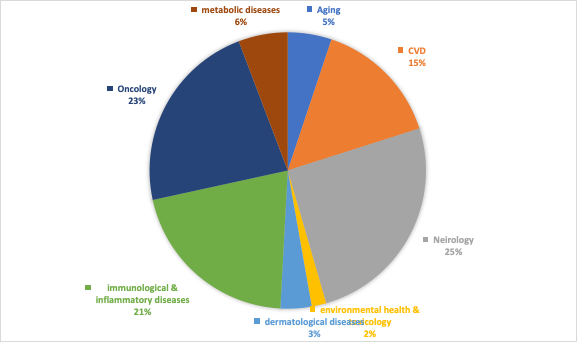
展望未来
蛋白检测技术的革新正推动蛋白质组学进入高通量、高准确性和高灵敏度的新时代。Olink从蛋白标志物发现(Olink Explore和Olink Reveal)到临床验证和转化(Olink Target,Olink Flex和Olink Focus)的全流程解决方案,通过主要生物学通路关键蛋白的完整覆盖和高标准的检测流程,为癌症、神经退行性疾病、代谢性疾病等复杂疾病的机制解析和临床转化研究提供了强大的工具。
大规模蛋白质组学计划,如UKB-PPP项目通过分析60万份样本中的5,400+种蛋白,显著加速了生物标志物的发现。基于此类数据开发的稀疏蛋白质模型,仅需 5–20种关键蛋白即可预测多种疾病风险,且其性能优于传统临床指标。我们期待未来通过高效、规范的转化研究,能够见证更多经过验证的蛋白标志物应用于临床实践,最终普惠患者。