

推荐产品
技术资料/正文
IVC - Do rat moms need a break?
80 人阅读发布时间:2024-10-14 16:27
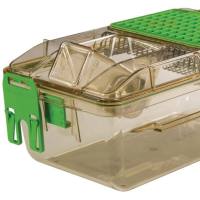
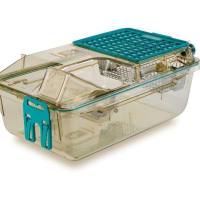
In most mammalian species the transition from birth to successful weaning is a gradual process. Initiated by the mother, it is characterized by decreasing amounts of contact between mother and offspring and in the frequency of nursing, and by increasing solid food consumption by offspring. In captive environments, the expression of the mother's behavior to move away from her litter is limited by the size and layout of the enclosure, and thus the level of maternal behavior appears to be governed in large part by the offspring. The benefits of a captive environment where mothers can spend time away from their litter have been demonstrated (domestic pig: Pajor et al., 999, 2002; rat: Ader and Grota, 1970; Grota and Ader, 1969; Plaut, 1974), although the types of housing studied are not widely used. Rat mothers and their pups are typically housed in single chambered cages with shelter and nesting material, and sometimes a loft. In order to meet evolving welfare standards, housing systems providing living space on two levels have recently been developed for rats. This type of cage might provide an environment that stimulates the expression of maternal behaviors similar to natural ones, especially if the upper level of the cage is not easily accessible to the pups.
上一篇
IVC - Exposure and Density of Rat Allergens for Personnel and in the Animal Room: A Comparison Between a Novel IVC Equipment for Rats and Conventional Open Cages
下一篇
IVC - Environmental enrichment does not affect nociceptive behaviours in neuropathic rats but affects exploratory and anxiety behaviours